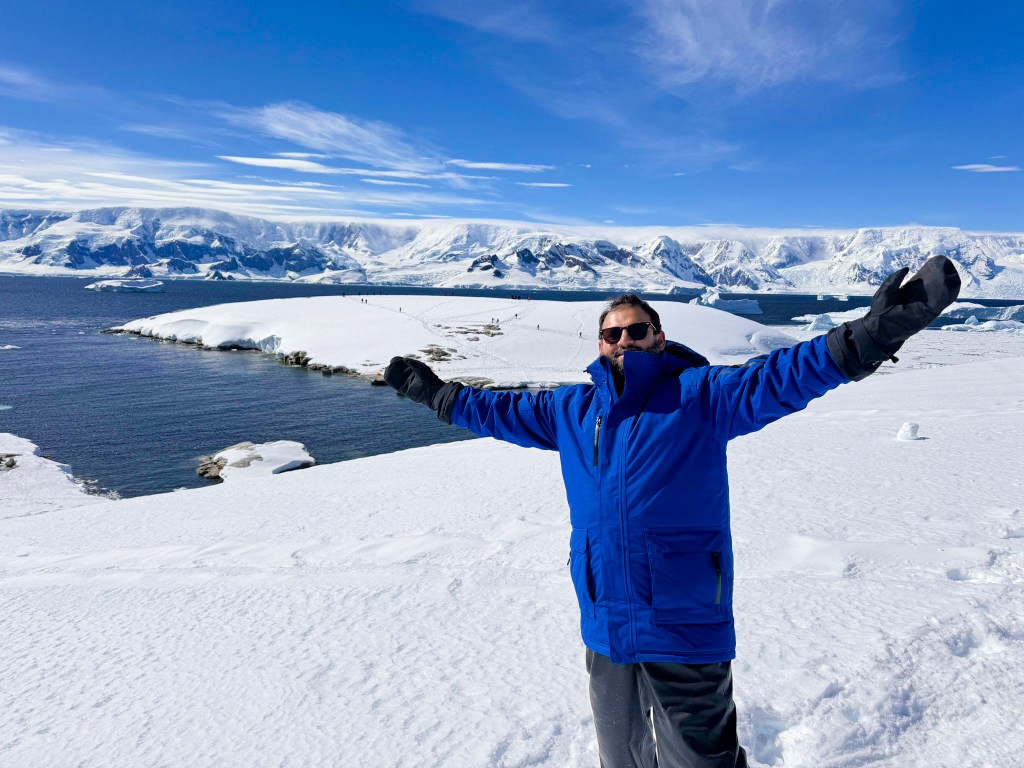

As a traveler setting foot on Antarctica for the first time, I was struck by a silence so complete it felt sacred. The landscape stretched out in a breathtaking expanse of white and blue—icebergs the size of cities drifted past like frozen sculptures, and the sunlight danced off the snow with a brilliance I’d never seen before. Every moment felt surreal: watching penguins waddle across the ice, hearing the thunder of a calving glacier, and breathing in the crisp, untouched air. It’s a place that humbles you—wild, remote, and unimaginably beautiful.
Antarctica, a vast and pristine wilderness at the southernmost tip of our planet, is a realm of breathtaking beauty and profound stillness. Its towering glaciers, endless ice fields, and shimmering blue crevasses create a landscape both alien and awe-inspiring. Beneath the silence, life endures—penguins huddle against the wind, whales breach icy waters, and seabirds soar above sculpted icebergs. Unspoiled by human development, Antarctica stands as one of Earth’s last great frontiers, a place where nature reigns in its rawest, most majestic form.
A trip to Antarctica is a once-in-a-lifetime opportunity. With no permanent human habitation and logistically tricky access, it’s no surprise that the “White Continent” is one of Earth’s most isolated and untouched places.
Like so many of Earth’s most majestic natural landscapes, it’s a place where no amount of flowery language or expertly taken photographs can do justice. There’s nothing like witnessing the breathtaking sight of icebergs and glaciers up close, watching penguin colonies waddle their way down snowy slopes, or whales breach as you kayak through one of the most remote and beautiful places on the planet.
Throughout my nineteen-day expedition voyage with Oceanwide Expeditions, I stepped outside my comfort zone, faced new challenges, and connected with nature in a profound way.
It sounds a bit Woo Woo, but my trip was truly a transformative experience. The type of experience you want to share with anyone who will listen, but also protect at all costs. To visit Antarctica is to become an ambassador for a remote and distant place that most can only dream of experiencing for themselves.
In this post, I’ll go over why you should consider visiting Antartica, how to get to Antarctica from Bangladesh, what to know before you book your trip to Antarctica and some of my favourite Antarctica experiences.
Before going to the Antarctic peninsula, we stopped at the Falkland Islands. You can read all about the Falkland Islands trip here.
We also went to South Georgia and the South Sandwich Islands. You can read all about that travel here.

Day 11 – Monday 16th December-2024, Heading south
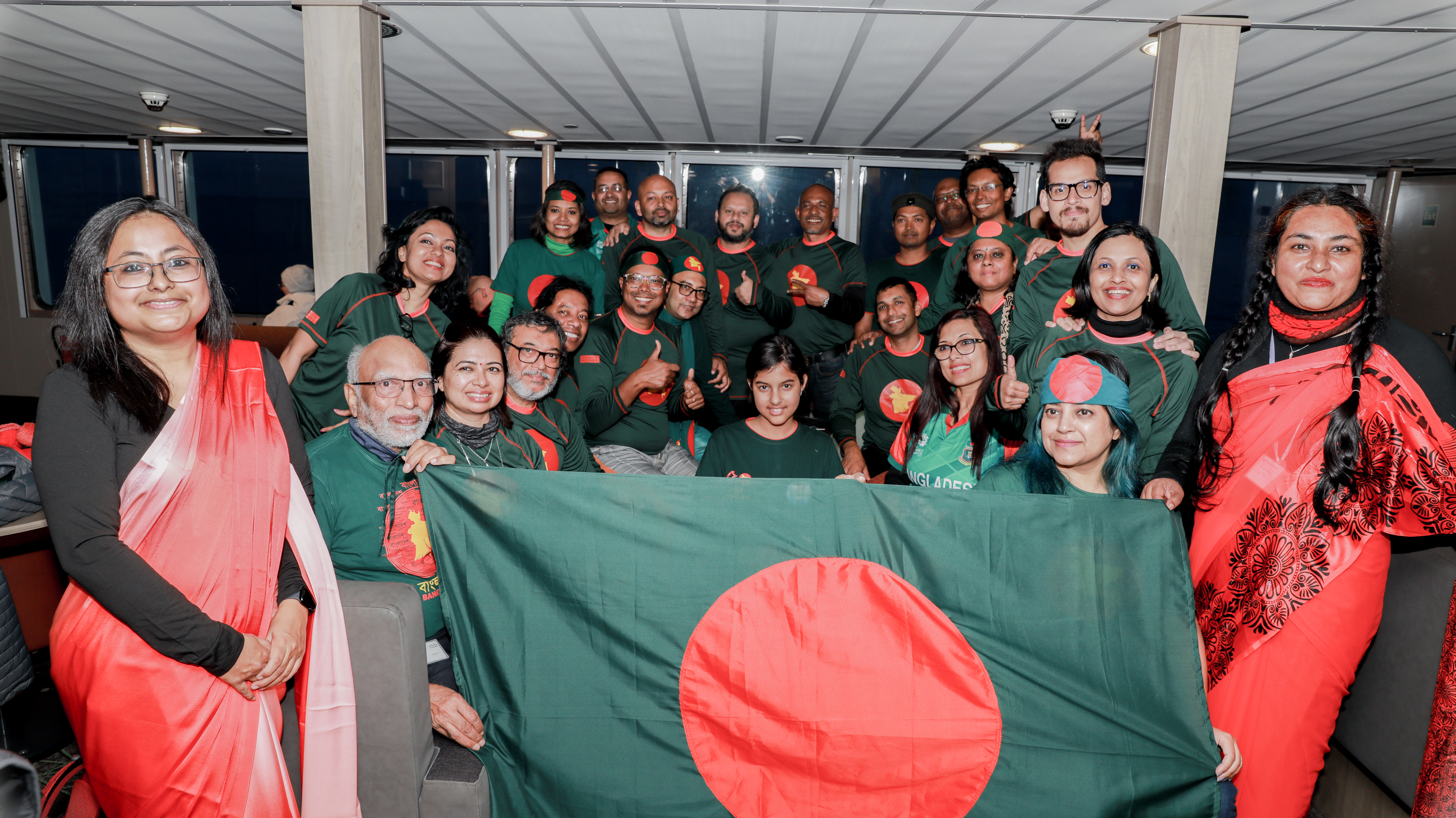
Today, We celebrated our Victory Day. In 1971, the heroic common people of Bangladesh rose up against the military Junta of West Pakistan and fought bravely for 9 months. On 16th of December, 1971, under the leadership of Bangabandu Sheikh Mujibur Rahman and the sector commanders of different forces won the war with the help of local Mukti Bahini (Freedom Fighters) when the Pakistan Army surrendered to Indian forces at the Racecourse Ground in Dhaka.

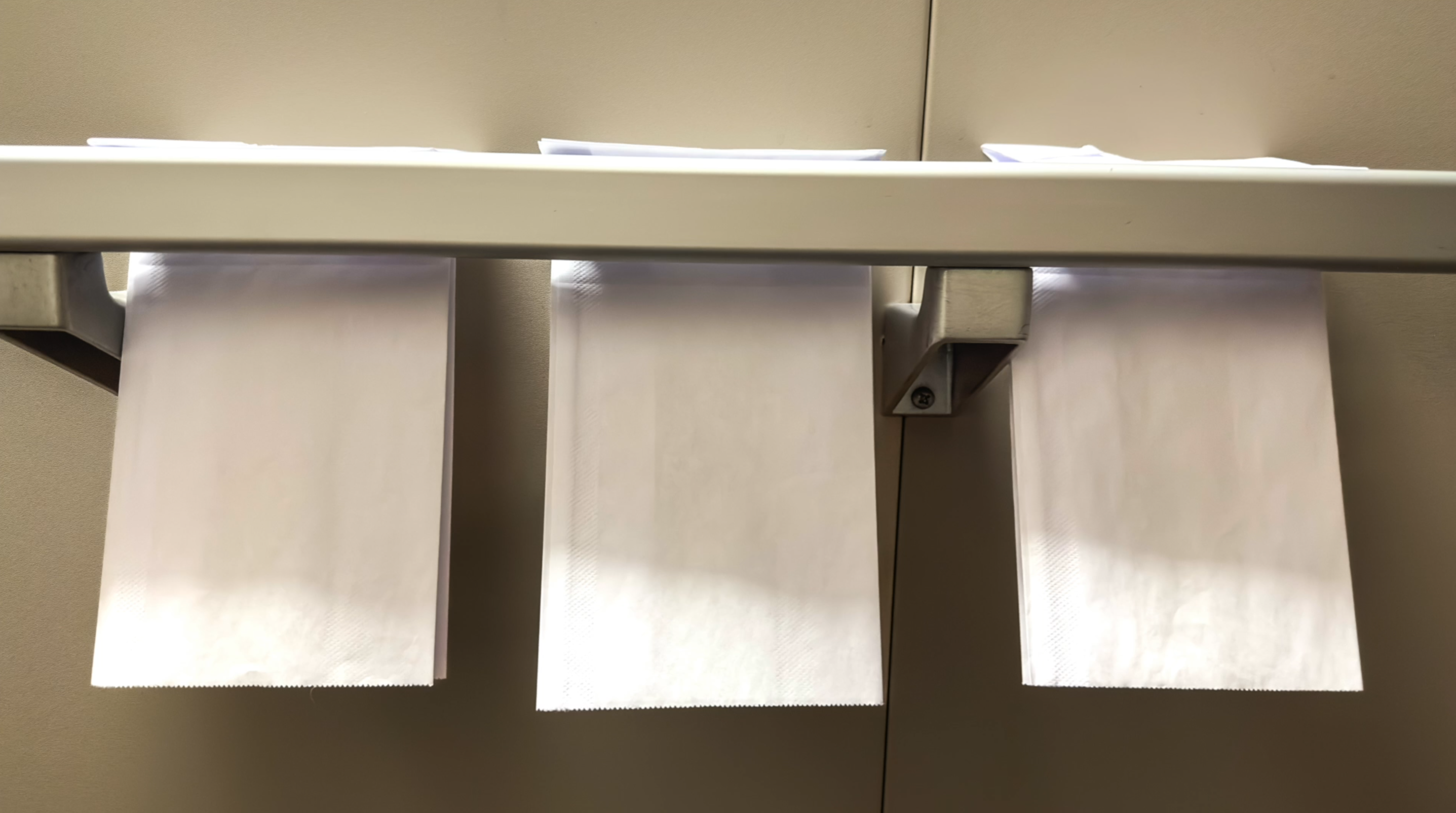
We expected to spend the next 2-4 days at sea before arriving in Antarctica, due to the wind and swell conditions. Our luck with good weather hadn’t exactly run out, but we were facing more ‘normal’ Southern Ocean conditions now. For some of us, it meant retreating to our cabins and catching up on some rest (and to relieve our sea sickness).
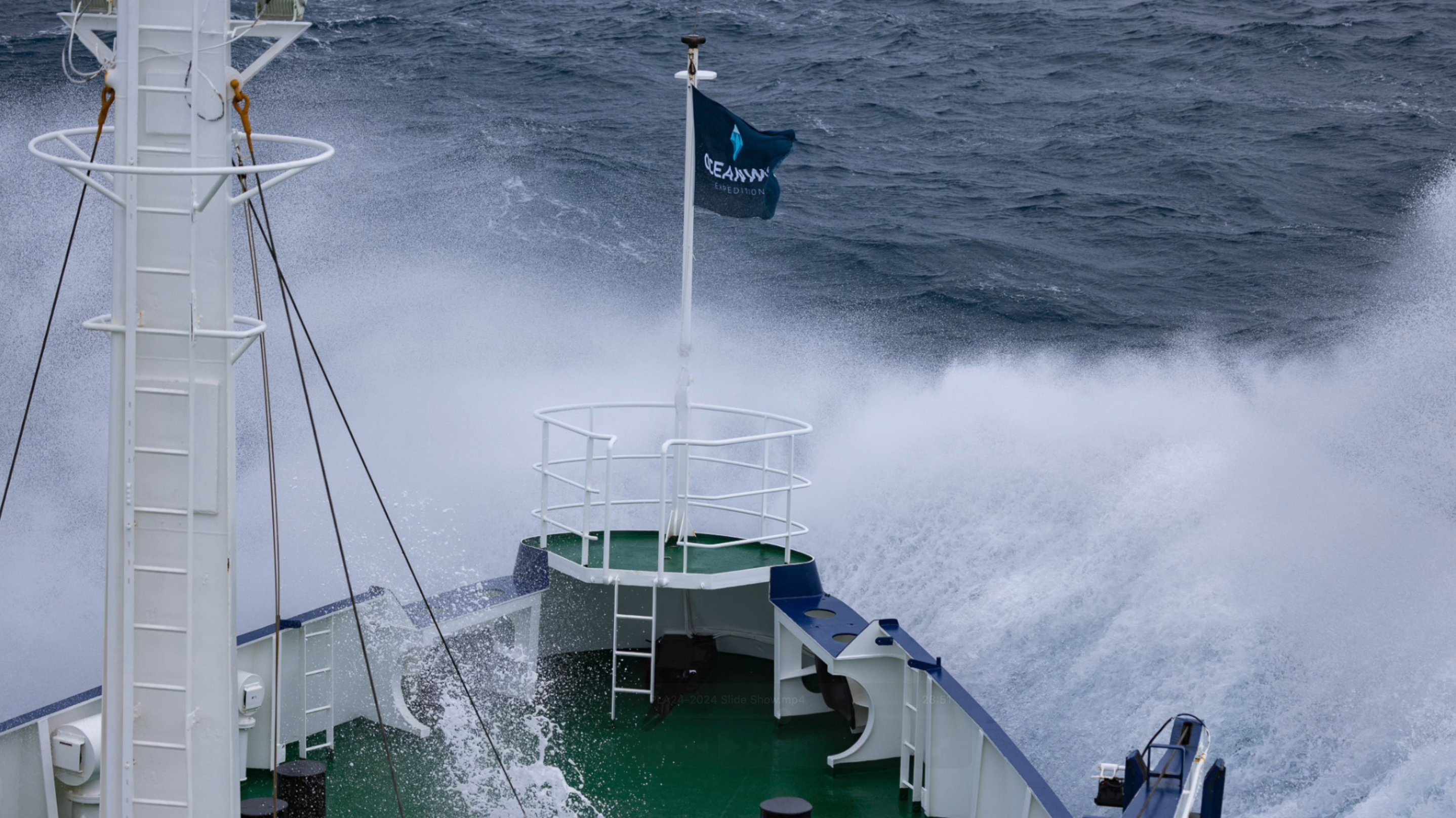
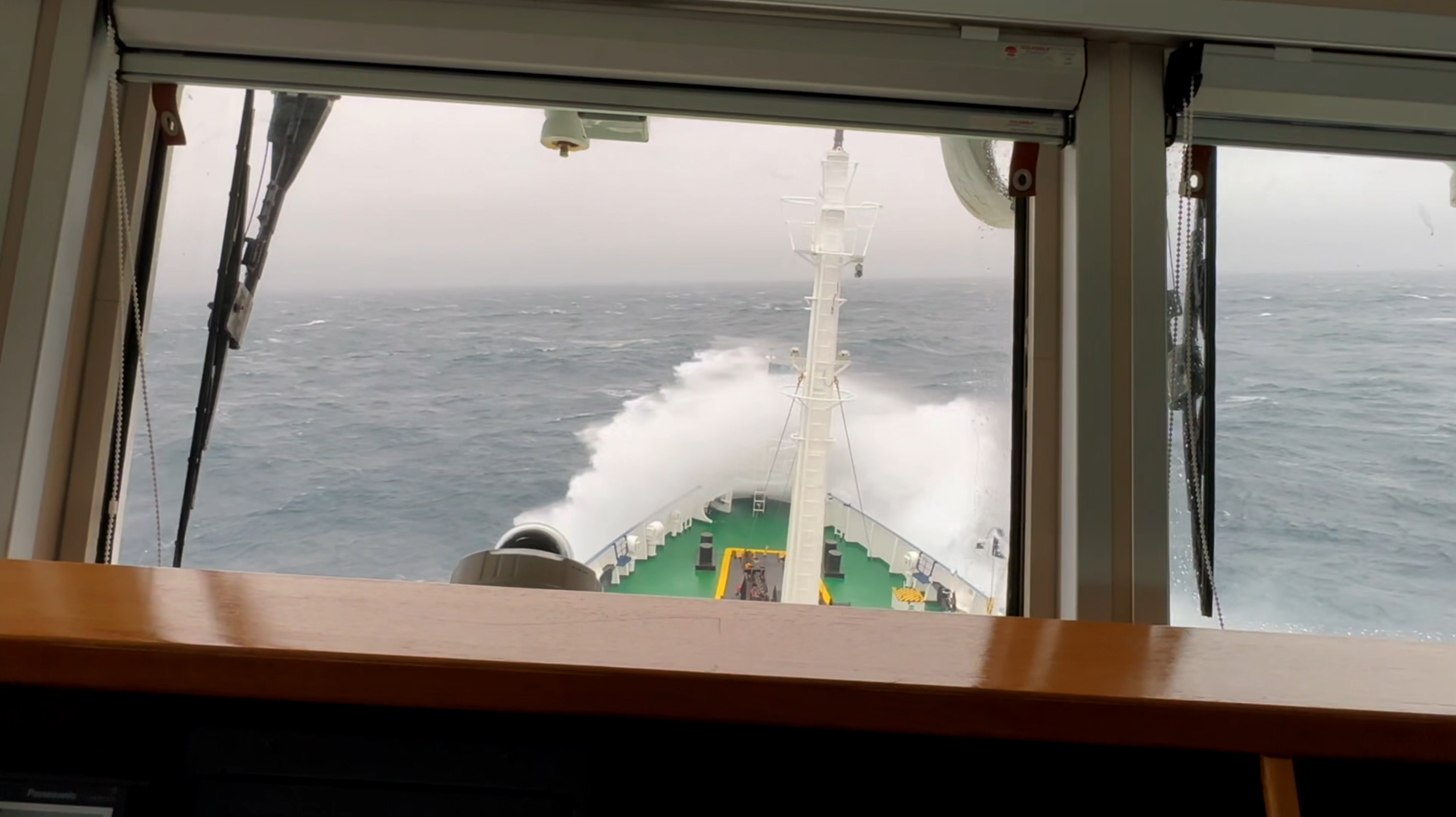
No blog or any vlog mentions about the rough Scotia sea and the Southern ocean. To me it seemed, this was even more rough than the notorious Drake Passage. I personally felt very ill and could not eat much through this 2 and a half day journey towards the Antarctic Continent. Even sea sickness medications did not help.

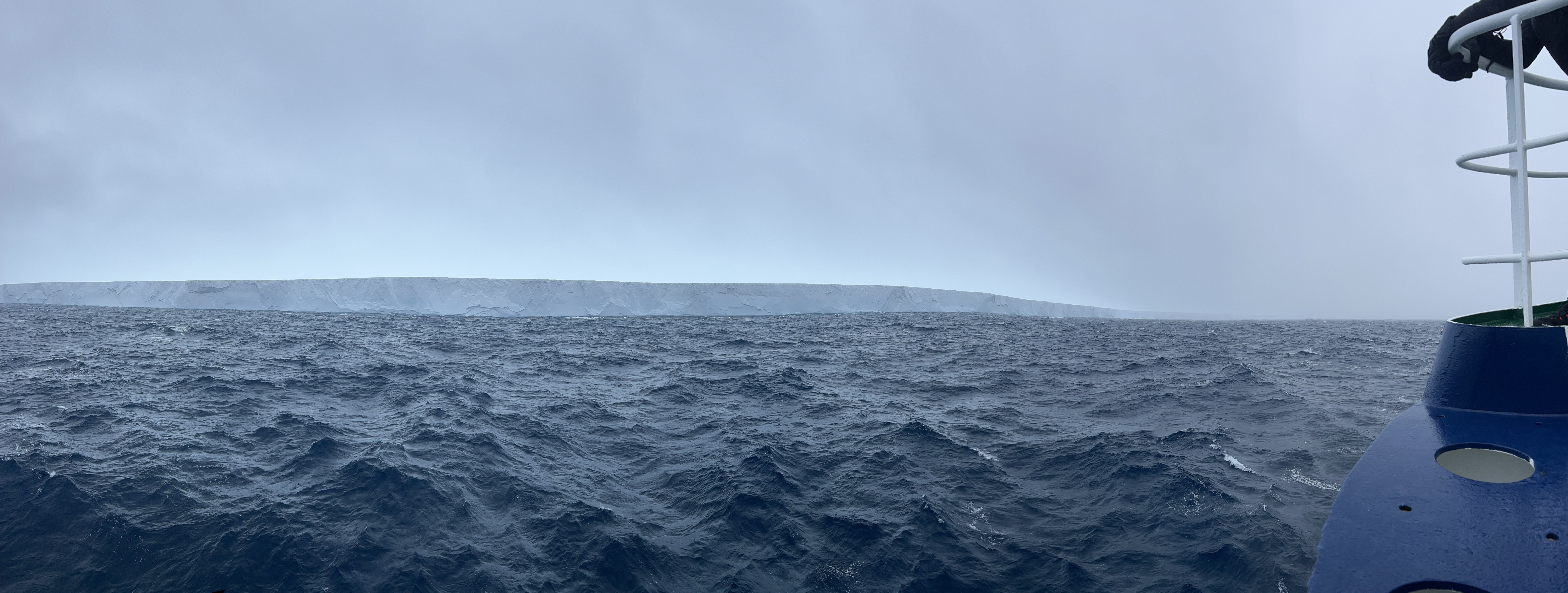
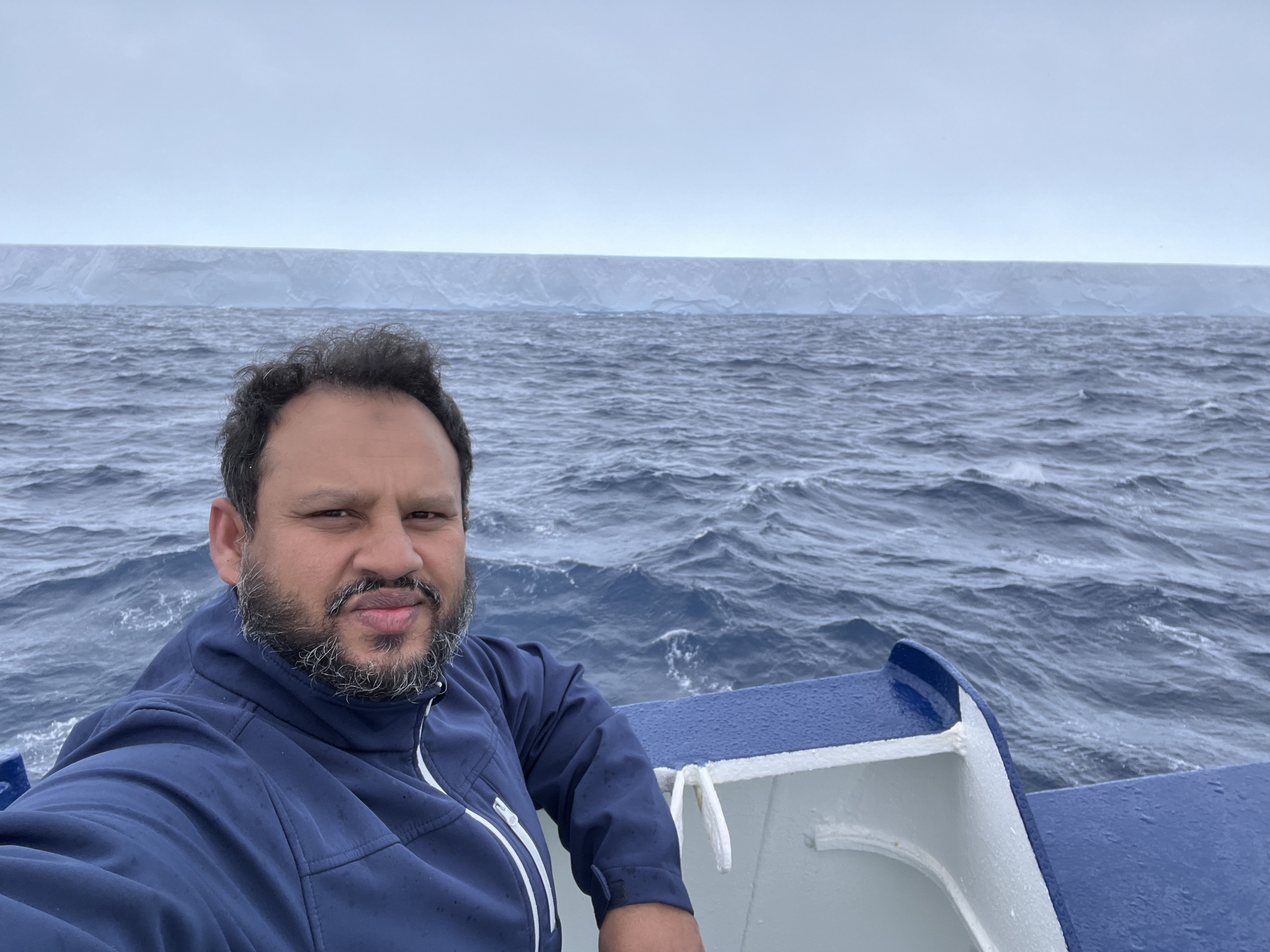
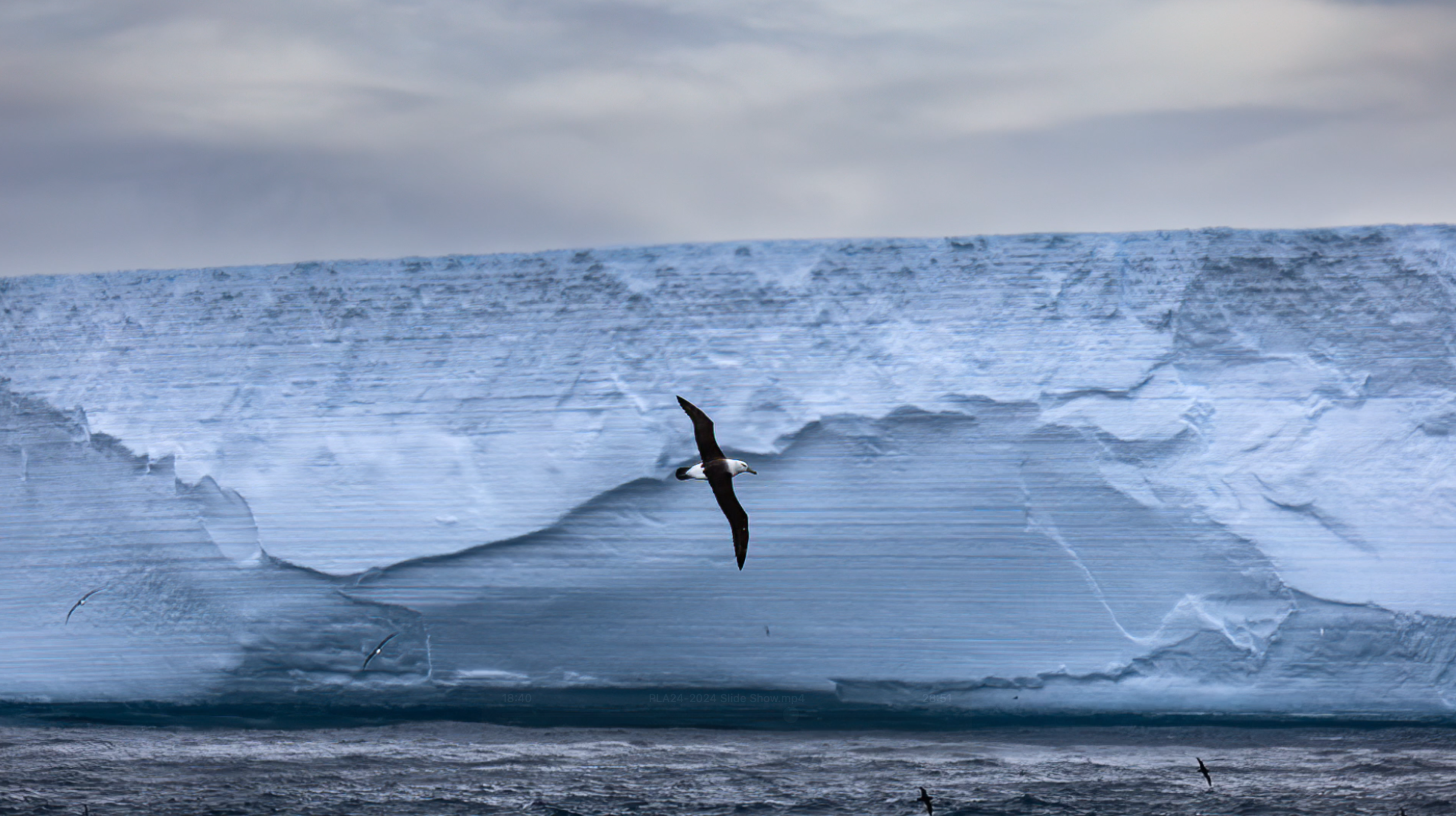
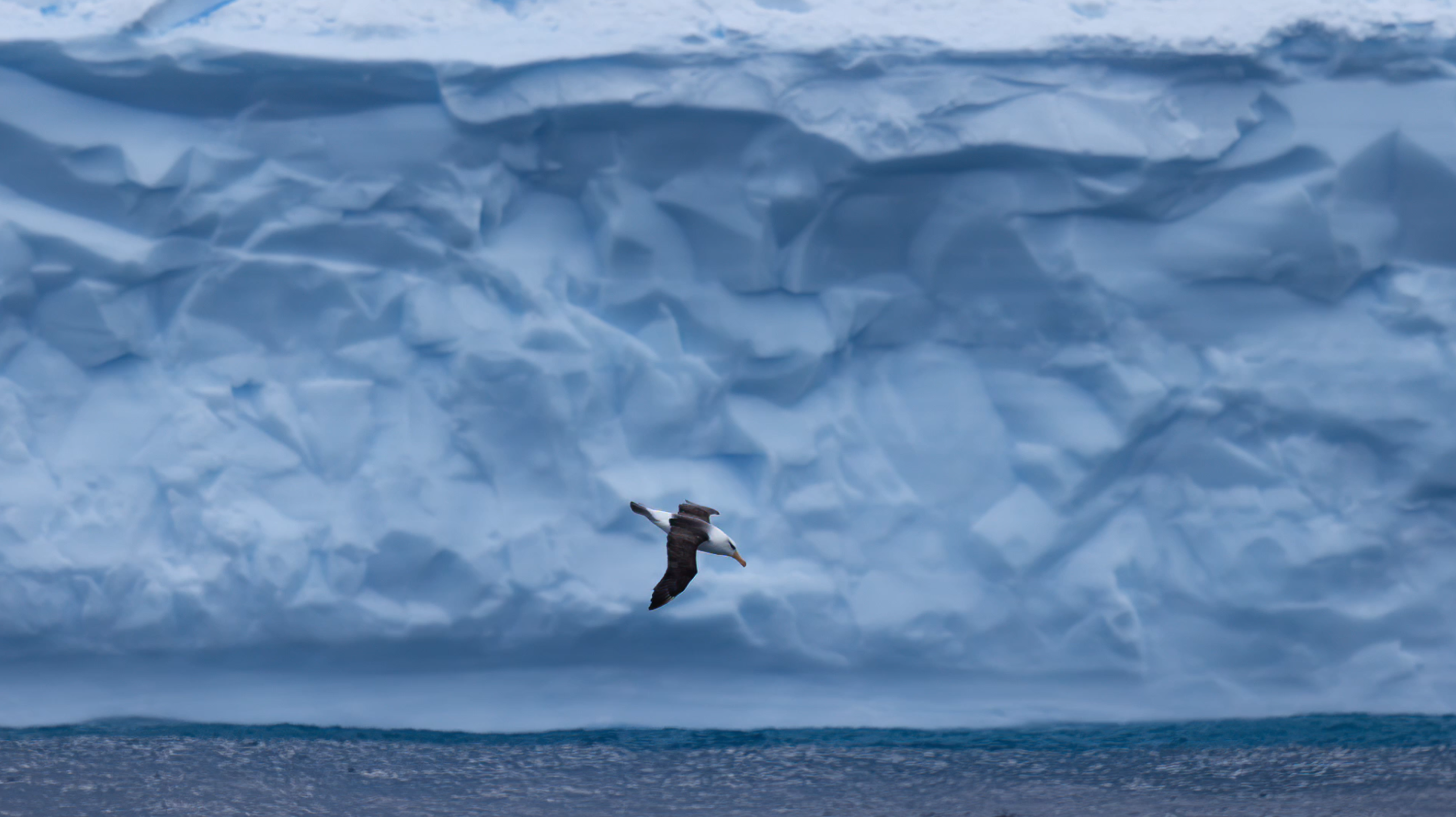
After a delicious lunch today, the Plancius veered towards a famous object on the move- the world’s largest iceberg, A23A. This iceberg measures approximately 4,000 square kilometers and is twice the size of Greater London!! It calved off from Antarctica’s Filchner-Ronne Ice Shelf in 1986, became stuck on the seafloor of the Weddell Sea for over 30 years, before beginning its slow journey north in 2020. But just a few months ago, it got sidetracked and became trapped in a spinning ocean vortex near the South Orkney Islands. Now, A23a is on the move again and we were so lucky to get a close up view of her! Never ever have I imagined I would ever see this massive iceberg with my very own eyes Alhamdulillah.
Day 12 – Tuesday 17th December-2024, At sea towards Elephant Island.
Good morning, good morning, came the cheery tones of Adam waking us up. We had a cruisy morning ahead of us, with some enjoying the sleep in and rest, while others already out on deck enjoying the birdlife and odd whale blow in the distance.

By mid-morning, it was time to do our mandatory biosecurity checks again. As we had come from South Georgia where there is a lot of vegetation and penguin and seal poop, it was important to check that our clothing had not collected any seeds, and our boots were nice and clean. We managed to complete this process much quicker than our last checks as we had become quite the experts in making sure our Velcro’s were clean and our boots scrubbed well!
Day 13 – Wednesday 18th December-2024, Elephant Island and at sea towards Antarctica
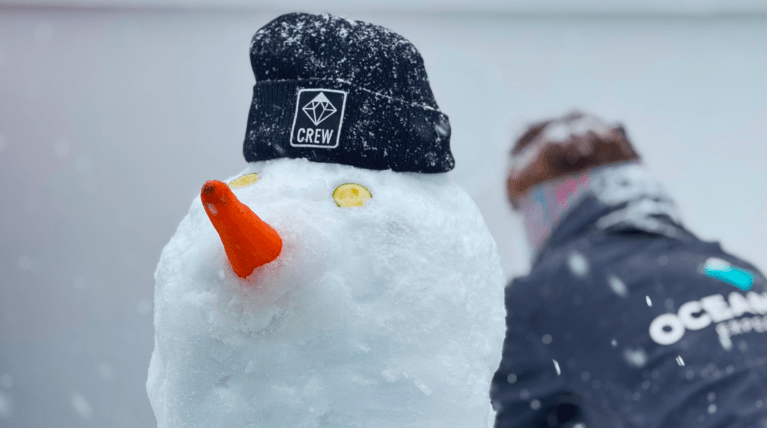
It started to snow as we got close to the Antarctic continent and the crew and us had fun building a snowman and other snow creatures on the deck.

Then the moment had arrived, we were nearing Elephant Island! We saw the island in true Antarctic conditions, covered in fog and with big waves breaking against the rocks. It gave us a good idea of how difficult it must have been like for Shackleton’s team to spend 4.5 months on the island, with no certainty anybody would come to rescue them! That is true endurance!
After a brilliant day at sea we headed to bed, excited to see the Antarctic peninsula the next day!
Day 14 – Thursday 19th December-2024, At sea towards Antarctica and Lindblad Cove
We were close to Lindblad Cove and the scenery was simply breathtaking. With the wind dropping we found ourselves surrounded by icebergs, penguins on icebergs and brash ice. Our guides explained to us the differences between the types of ice and where brash ice originates from. We also heard the ice making a crackling sound which is compressed air escaping the ice while it’s melting.
We cruised each in our own direction and calls on the radio could be heard about penguins on ice. Penguins on ice is probably the first thing that comes to mind when thinking of Antarctica so we quickly made our way to take photos of these cute little creatures on several ice flows and icebergs. Today we were lucky once more as we found three different species of penguins, the Gentoo, the Chinstrap and the Adelie penguin. We would not visit an Adelie colony during our remaining days so seeing them on the ice was simply lovely.

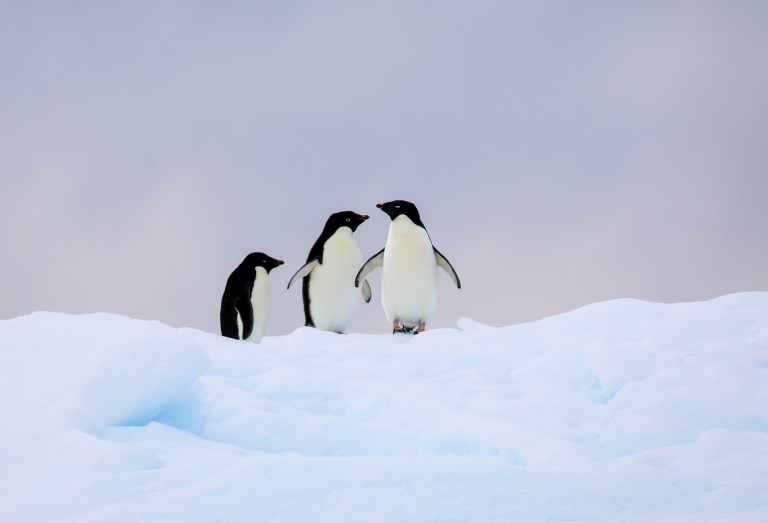
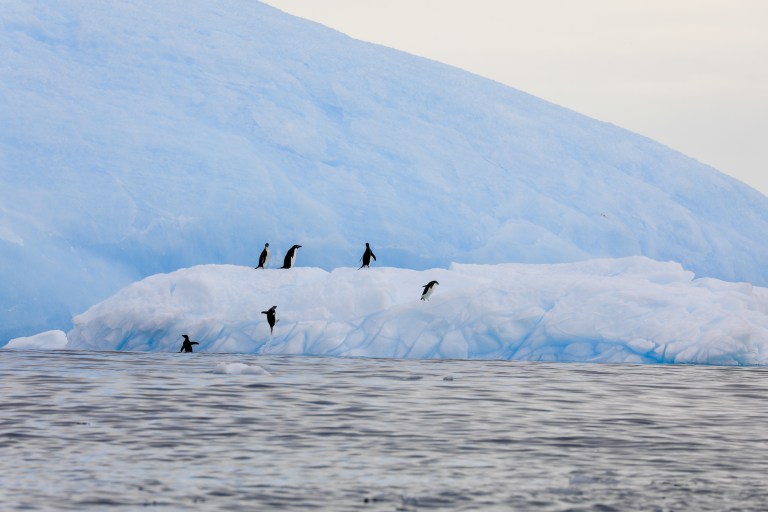
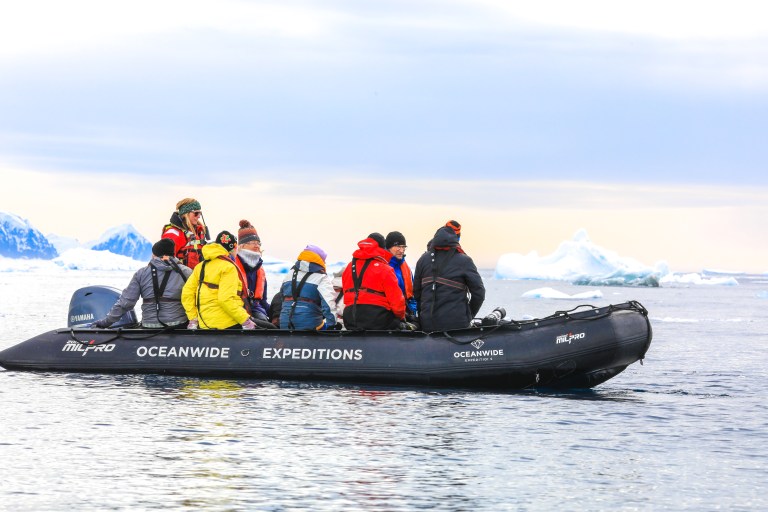
After about 2 ½ hours we wanted to head back to the ship, but the ice had closed in quite a bit so getting out with the zodiacs proved to be challenging. However, the guides showed us how it’s done and while we enjoyed driving through this unfamiliar terrain, we enjoyed every minute of the navigation. Our guide assured us that zodiacs are sturdier when it comes to ice compared to the Titanic and they were right, soon we were out safe and in more open waters.


Day 15 – Friday 20th December-2024, Portal Point and Foyn Harbour
Who would have known when waking up this morning that today would become one of the most extraordinary days of our lives. The stars aligning to offer one of the worlds grandest experiences.
Waking up yet another time to the voice of Adam, gently bringing us back to our living dream aboard Plancius, we woke to a pristine Antarctic day. The sky is cloudless, the sun is shining, high in the sky, promising some red faces!
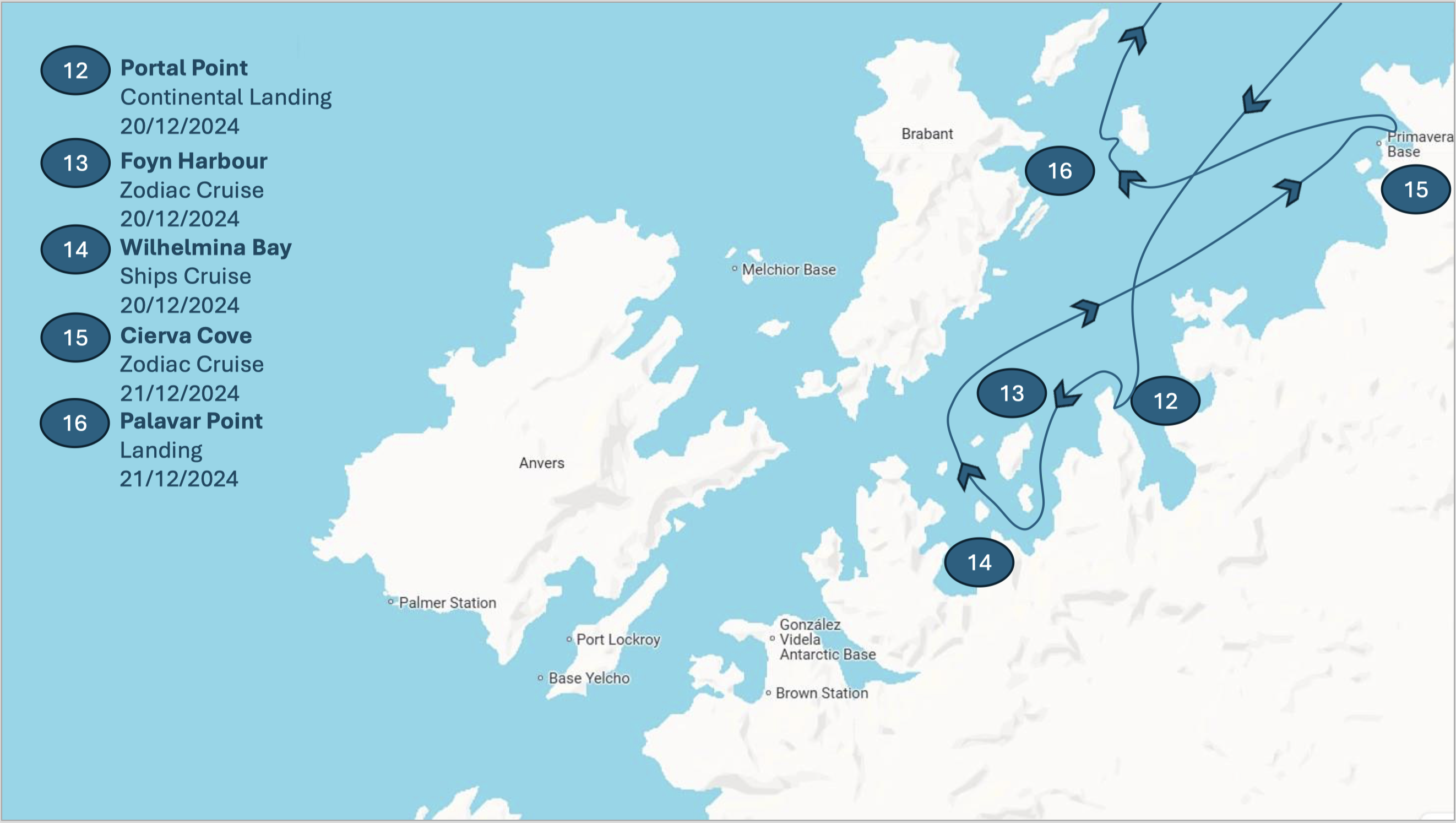
Our first stop for the day is Portal point, a continental landing! After a bumpy and humid zodiac ride whe set foot for the first time on the seventh continent. (personally my 5th Continent)
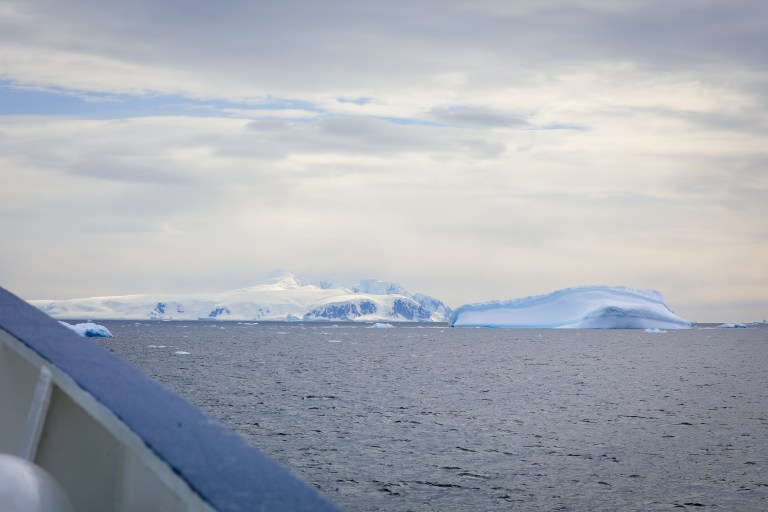

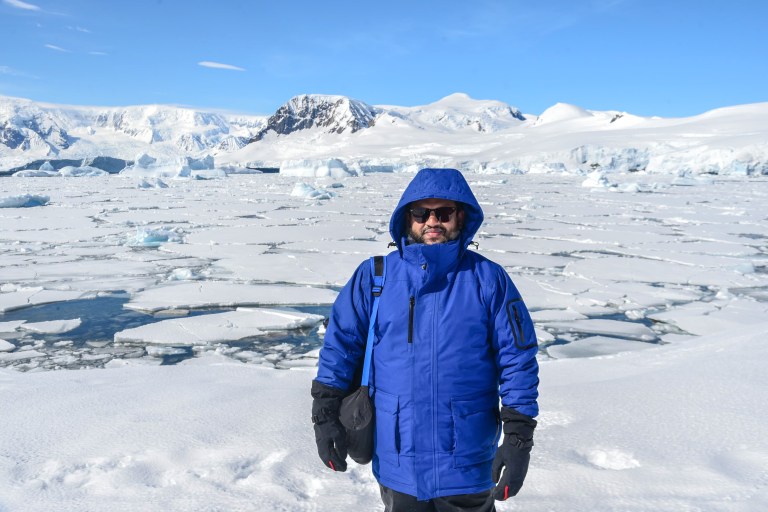
Later, after a hearty lunch and a short cruise we arrived at Foyn Harbour. It is a spectacle, a vast bay with countless glaciers sliding in its transparent blue waters. Our plan for the afternoon was an extended zodiac cruise where we will visit the “Governor”, a ship wrecked in a cove after a drunken sailor knocked down a petrol lamp while dancing on a table! Close by were a large group of Antarctic terns and their little ones, all nestled on a rock formation under a Chilean navigational mark, reminding us of the geopolitical rivalry in the region.

As we made our way further in the Bay we notices a large amount of whales devided in several little groups. They seemed to be all feeding on the rich supplies of krill the Antarctic waters offer. As we approached we sensed that this was going to be a special moment for all of us as even the guides started getting verry excited and told us how unusual this was.
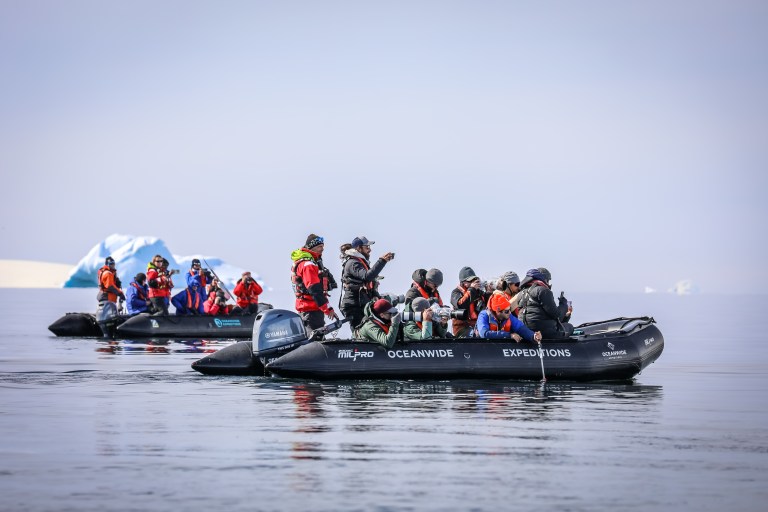

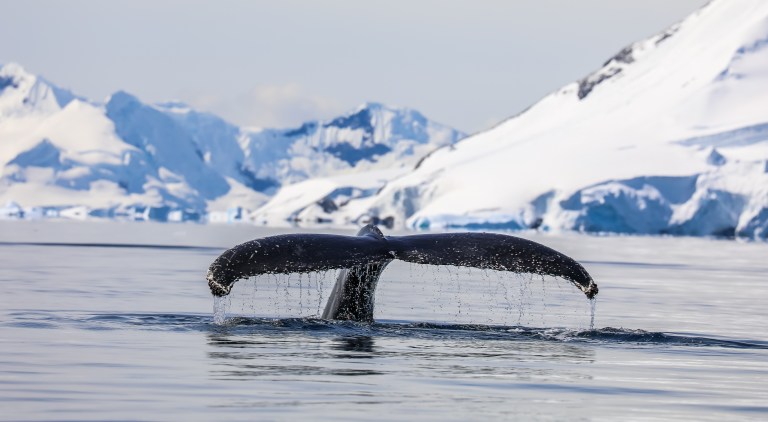
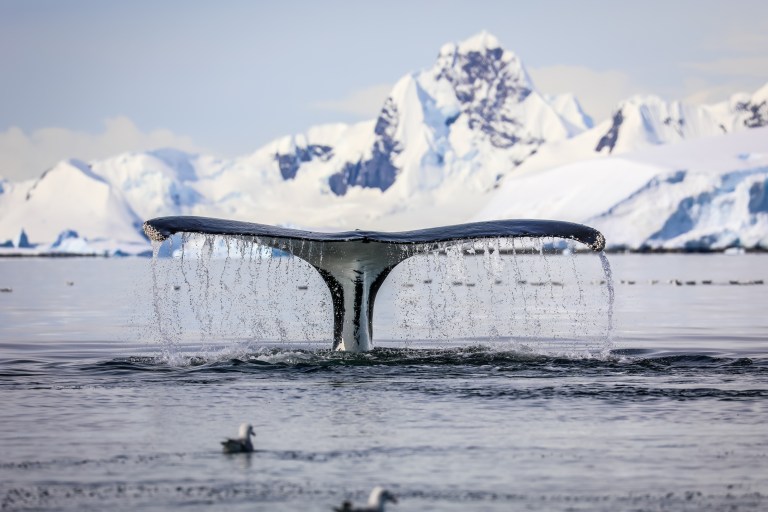
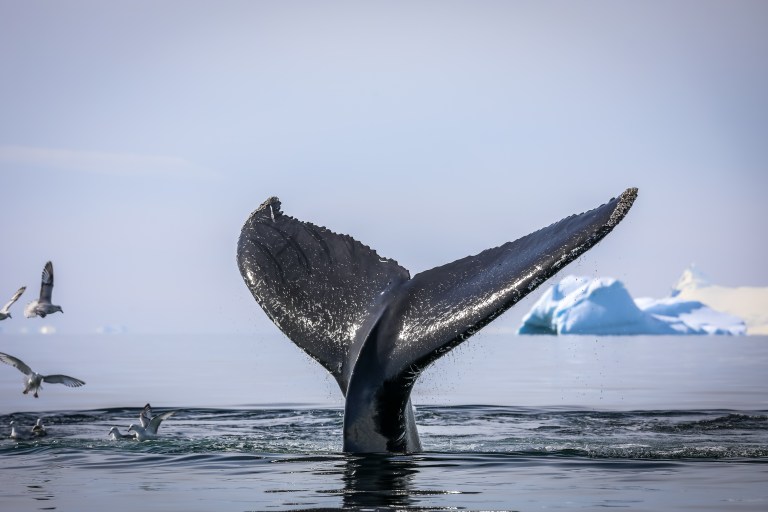
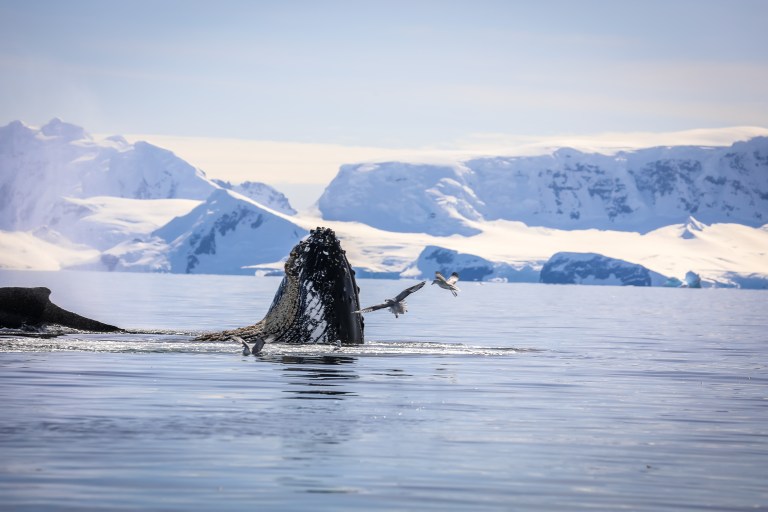

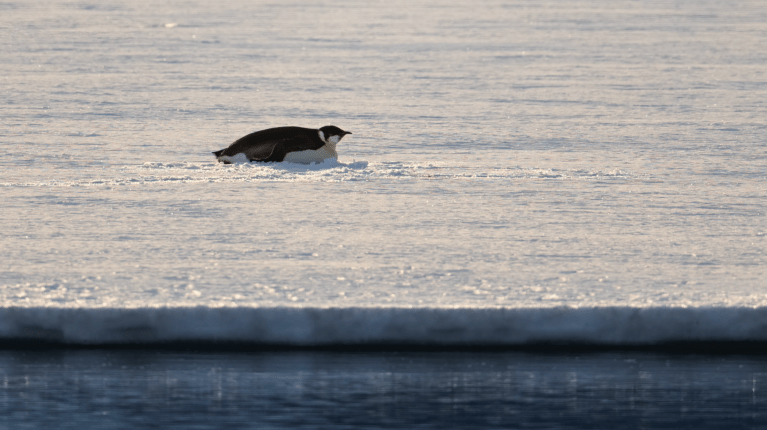
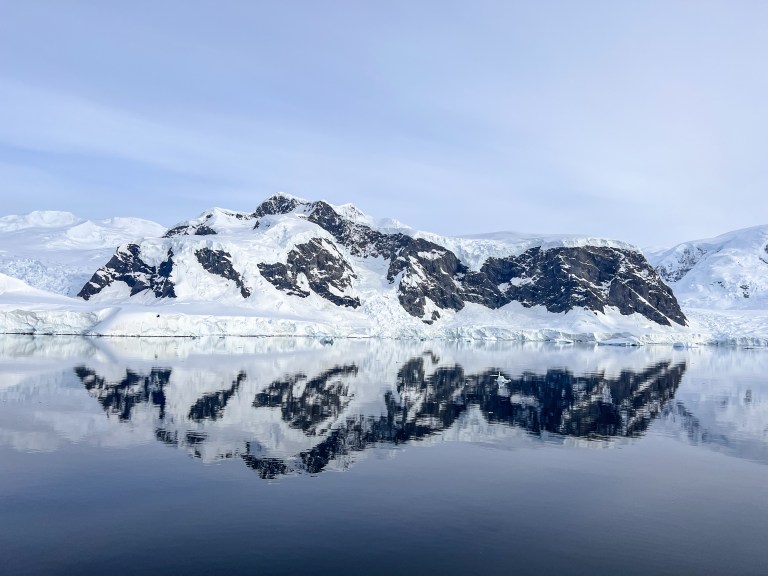
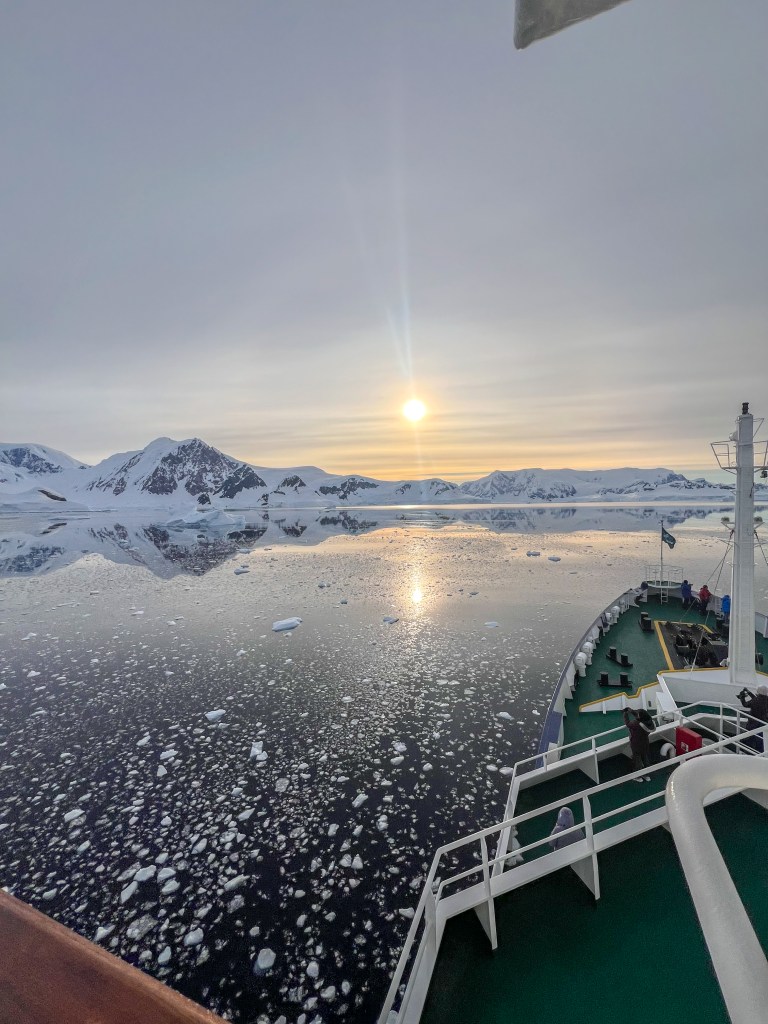
In the evening we made our way into a scenic corner of Antarctica where we were invited on the top deck after dinner to drink apple juice. And when we thought this day couldn’t get any better, as the sun started settling at its lowest point during the southern summer we came upon the rarest living creature o Antarctica, a solitary young Emperor penguin. This encounter was the cherry on the cake for what has been for us and for the whole crew the most exceptional day an expedition can offer. Emperor penguin colonies are few hundred miles deep inside the Antarctic mainland and we were not supposed to go there. How this chick came so far out was bemusing.



Day 16 – Saturday 21st December-2024, Cierva Cove and Palaver Point
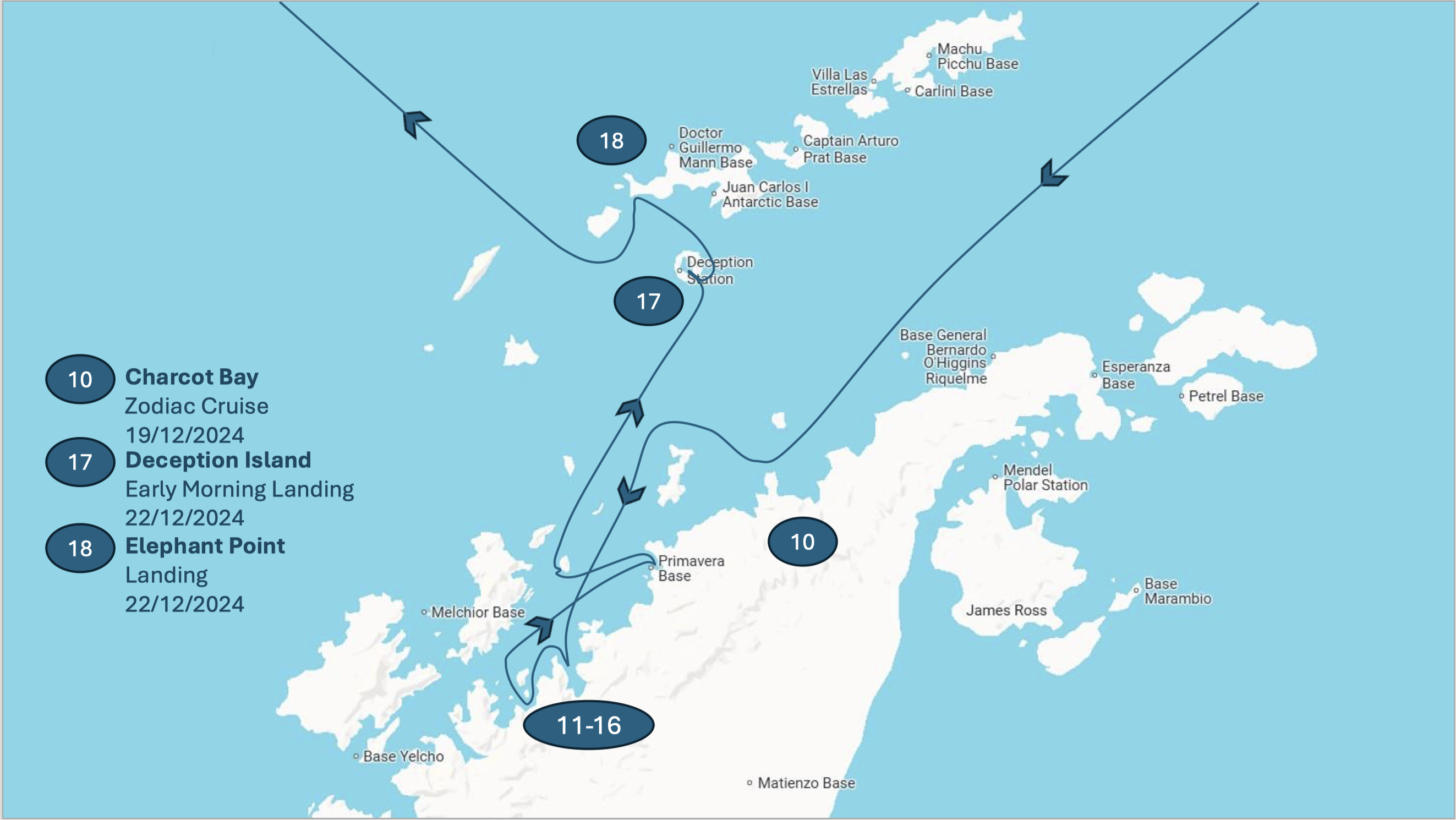
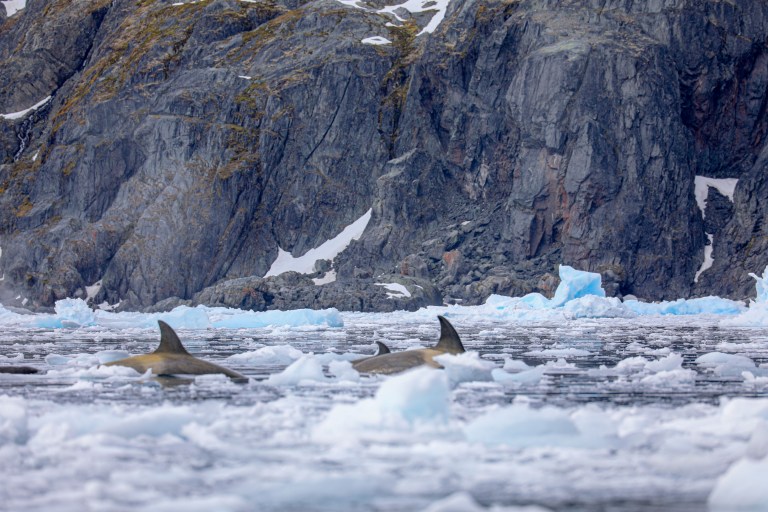
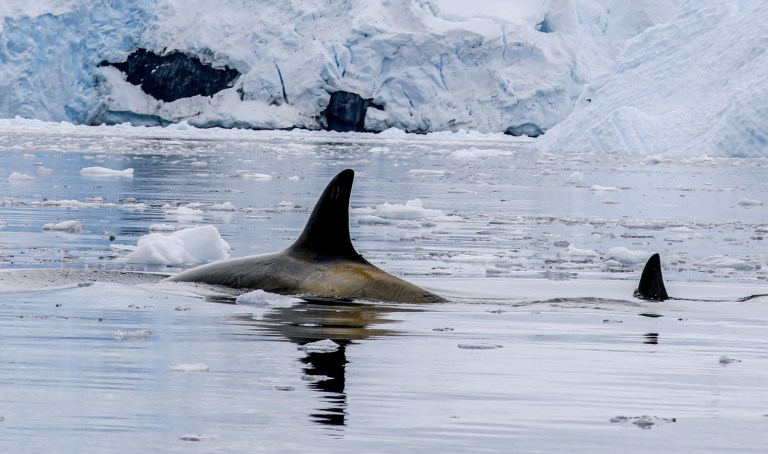
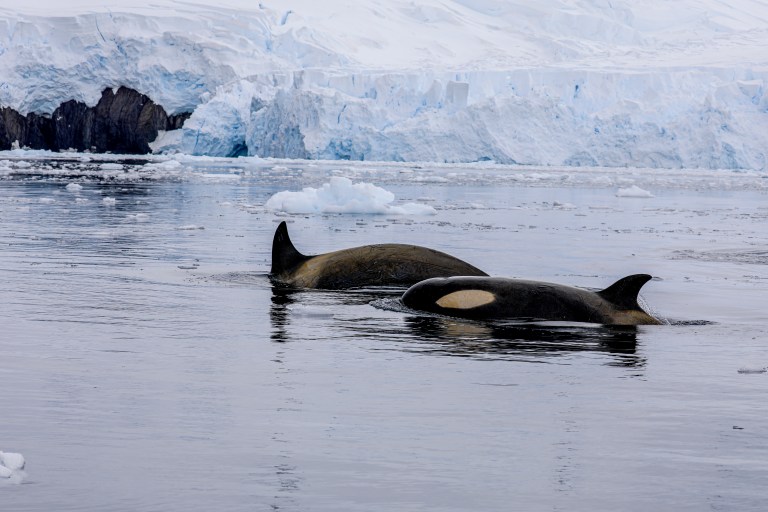
We were at Cierva Cove, a bay on the Antarctic continent, with plans for a Zodiac cruise. The scenery was breathtaking, with the bay filled with ice, and many whales had already been spotted from the ship. Just 15 minutes into the cruise, we heard Koen’s voice: “We have Orcas!” So we tried to follow them. Although we managed to get some good sightings, the Orcas were moving fast into the bay, and the icy waters made it difficult to keep up. With so many boats around, some of us decided to simply enjoy the views we had and take in the rest of the morning’s incredible wildlife. The expedition team were so desperate to show us Orcas that we were after them all through out the bay and I was able to take some incredible pictures.


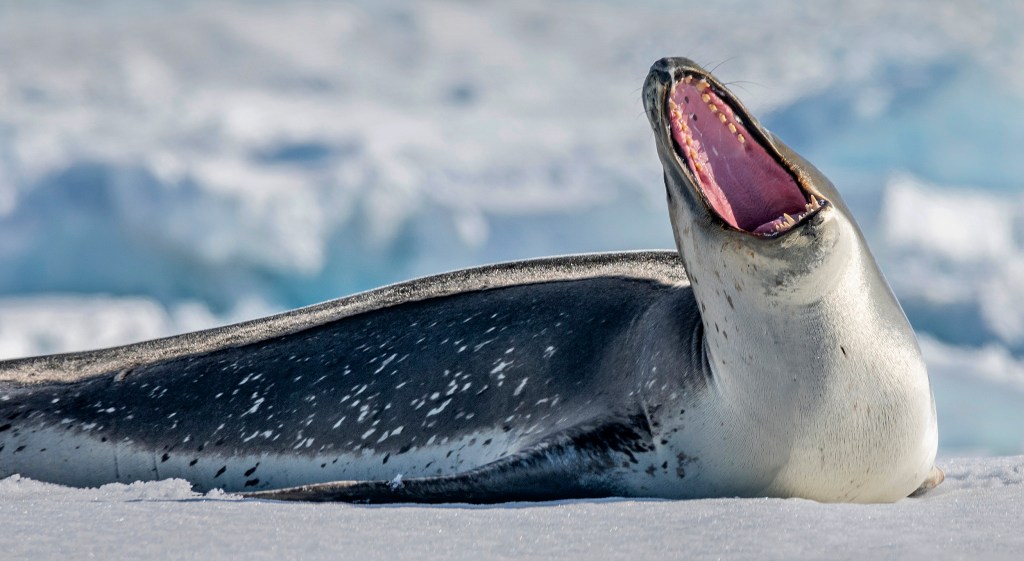
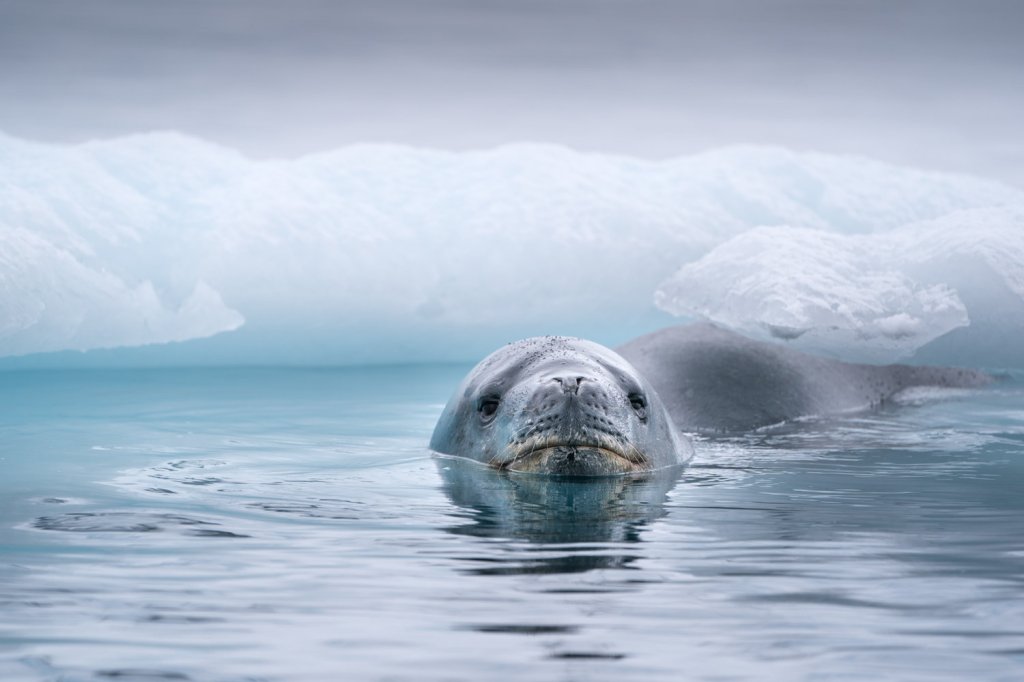
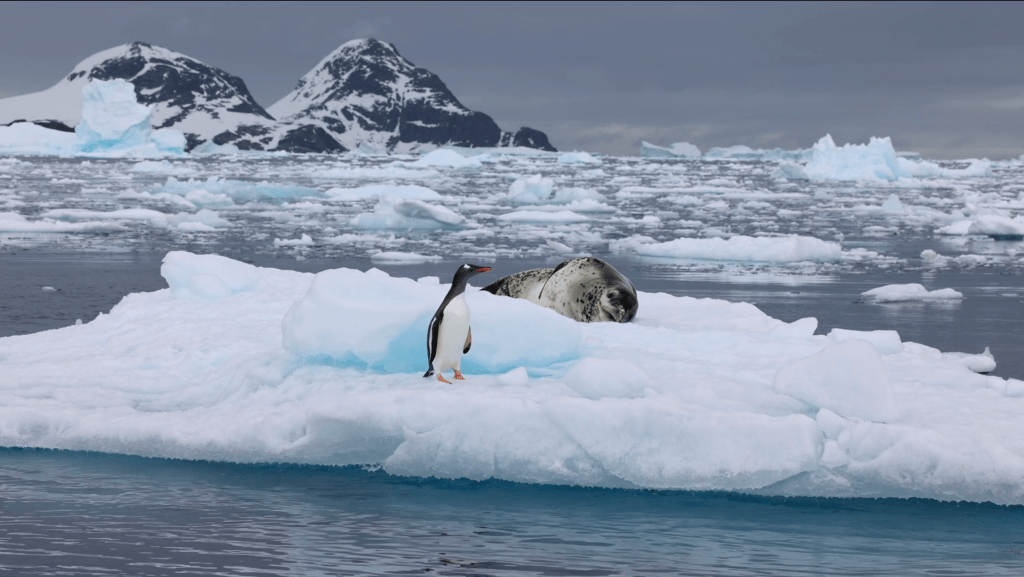
Karma treated us well. Many of the boats that hadn’t seen the Orcas up close were rewarded with a leopard seal hunting near the Argentinian station. We didn’t witness a successful hunt, but it was still fascinating to watch.
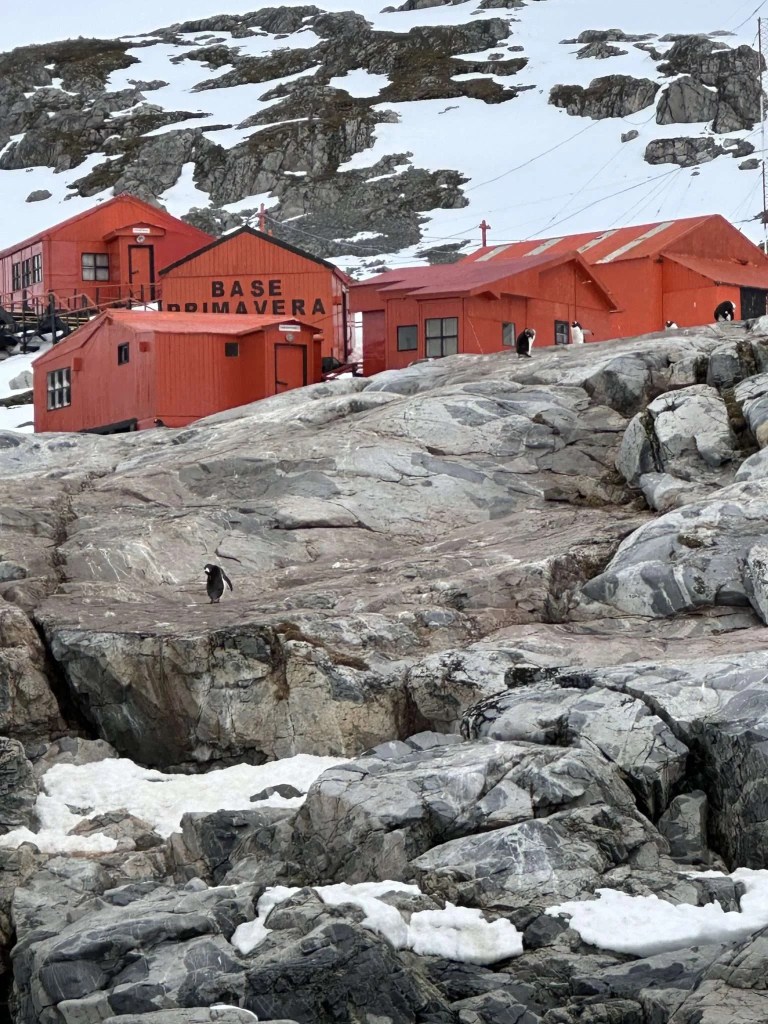
The “Primavera” Argentinian Station overlooks the bay. It operated year-round from 1977 to 1982, but since then, it has only been open in summer, focusing on research related to birds in the surrounding protected areas, limnology, and the development of mosses and lichens over time. It was a fantastic morning. As usual, we returned to the ship later than planned, but there was just so much to see outside.

After lunch, we set sail for Two Hummock Island, where we landed at Palaver Point. Following another great meal and a short rest, the Expedition team took us ashore to explore a rocky hill on the island. The slope of the hill is home to Chinstrap penguins, as well as many skuas preying on eggs and chicks. We had excellent sightings of these predator birds, and we admired the mosses growing between the leftover snow. The views over the bay and surrounding glaciers were absolutely stunning. Antarctica feels so vast, and we are so small. During the landing, we had the chance to hike up some elevation and take in the scenery, even from a bird’s-eye view.
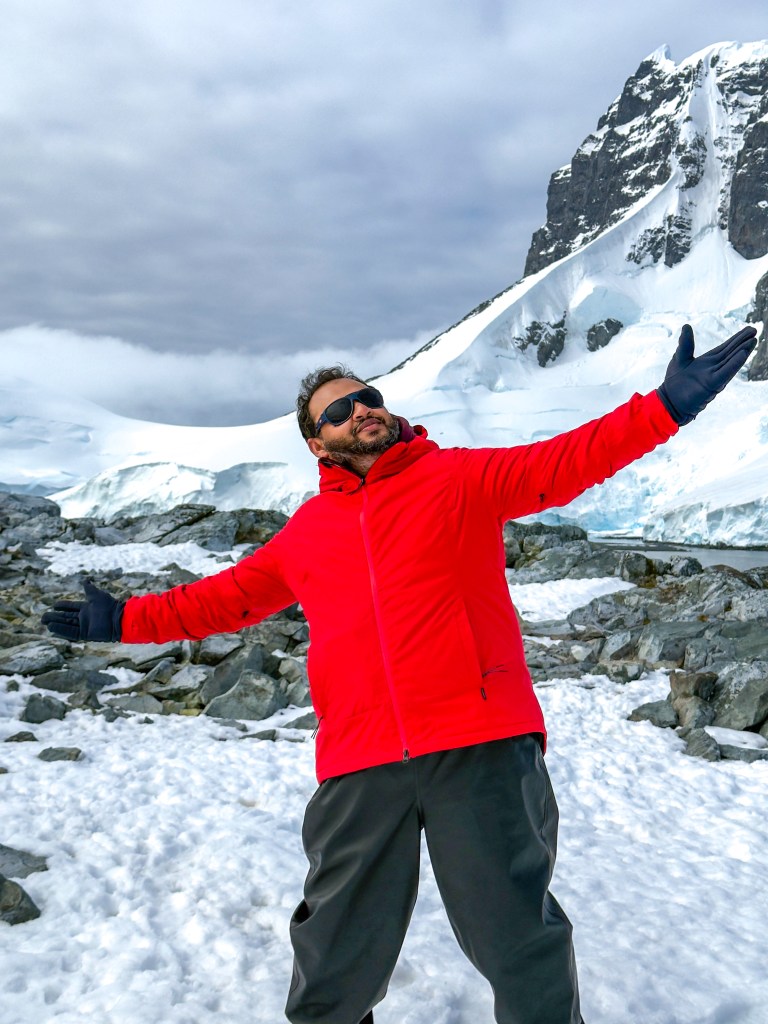

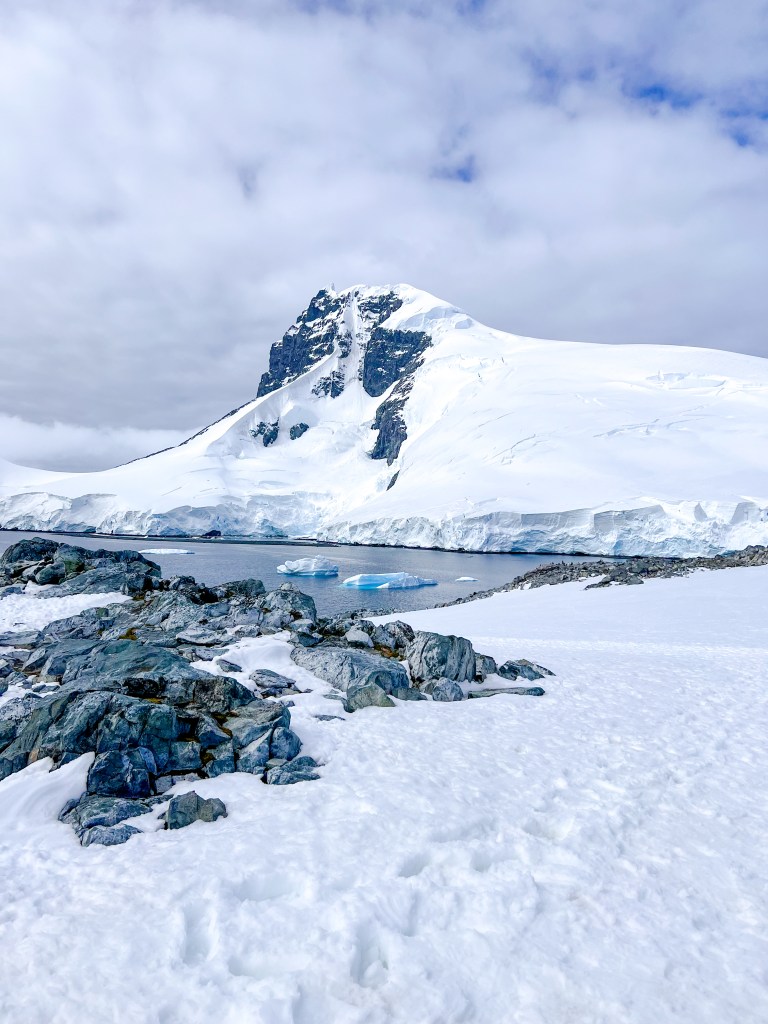

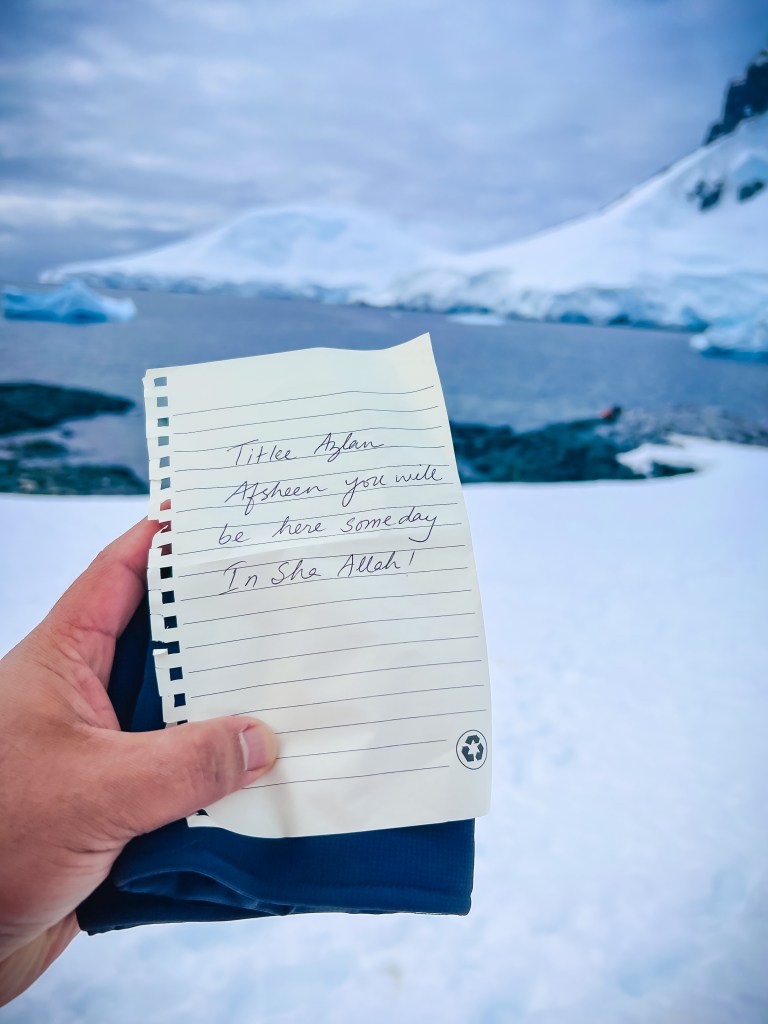
Another remarkable day in Antarctica. What a journey—truly the trip of a lifetime, and it’s not over yet. Adam shared the plans for tomorrow, and we’re looking forward to another full day on the South Shetland Islands. We can’t wait to explore more!
Day 17 – Sunday 22nd December-2024, Telefon Bay and Elephant Point
This morning wakeup call came earlier than our usual routine. But it was well worth the early call to watch Plancius navigate through Neptune’s Bellows – a narrow passage in Deception Island. The gap between the cliffs and shoreline seems quite wide on first impression, but half the opening is too shallow for the ship to use safely. Cape petrels were gliding around, and chinstrap penguins were swimming around the ship as we entered Port Foster and had views of Whaler’s Bay as we sailed to the back of the caldera.


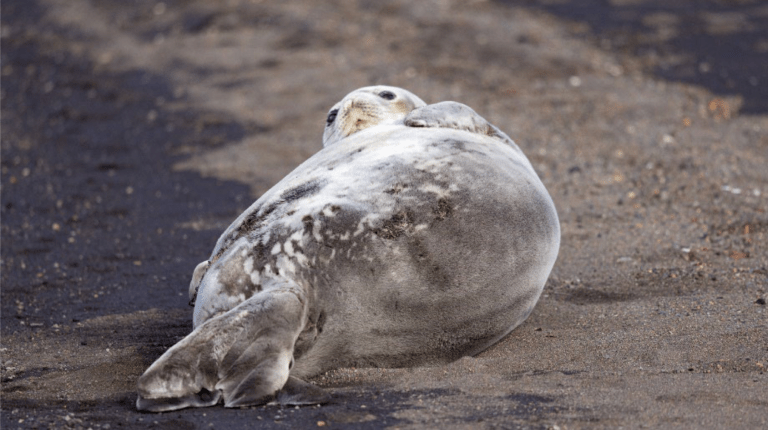
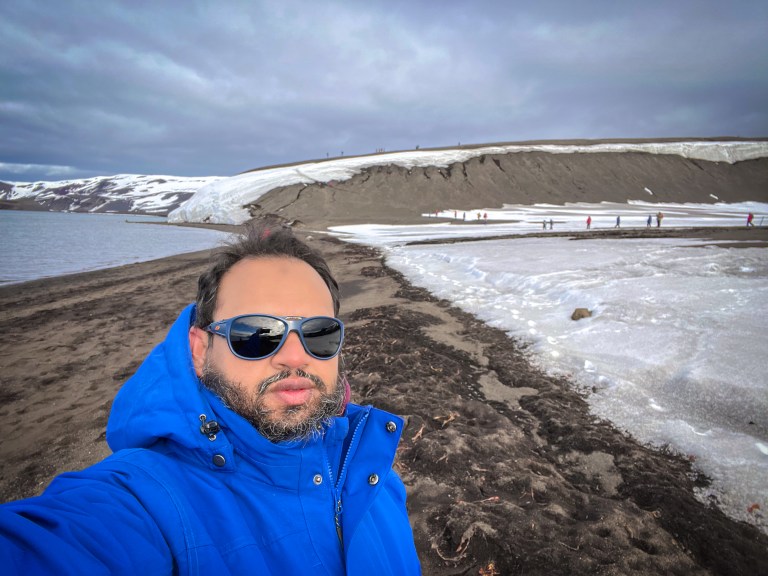
The expedition team set up a nice route over part of the volcanic craters at Telefon Bay for our morning landing. Walking on the volcanic gravel and taking in the views gives you a feeling of walking on another planet. The snow highlighted the features of the caldera and added to the beauty and novelty of the landscape. There isn’t much wildlife on the inside of Deception Island, but there was a Weddell seal resting on the beach throughout the landing. After a few hours ashore it was time for a morning Antarctic swim! The expedition team had brought towels to the beach for those that wanted to take part in the Polar Plunge. Some plungers had penguin accessories for their swim which added to the fun!
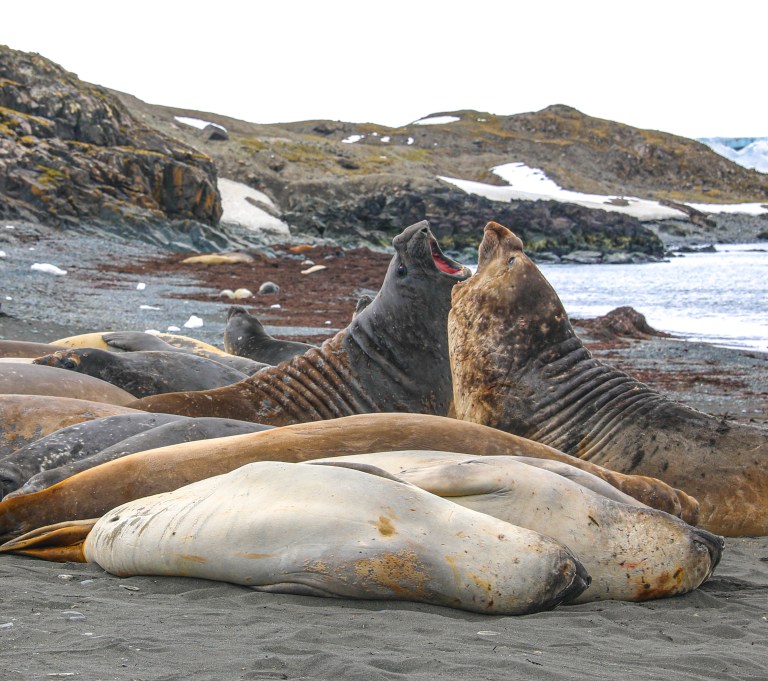
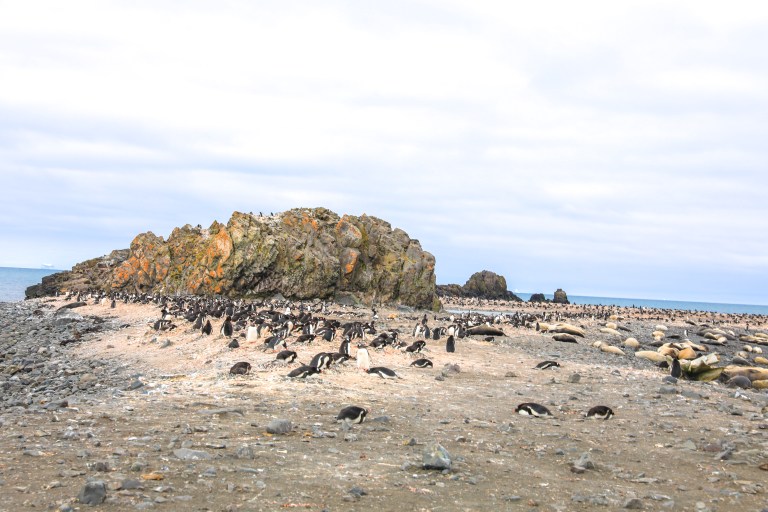
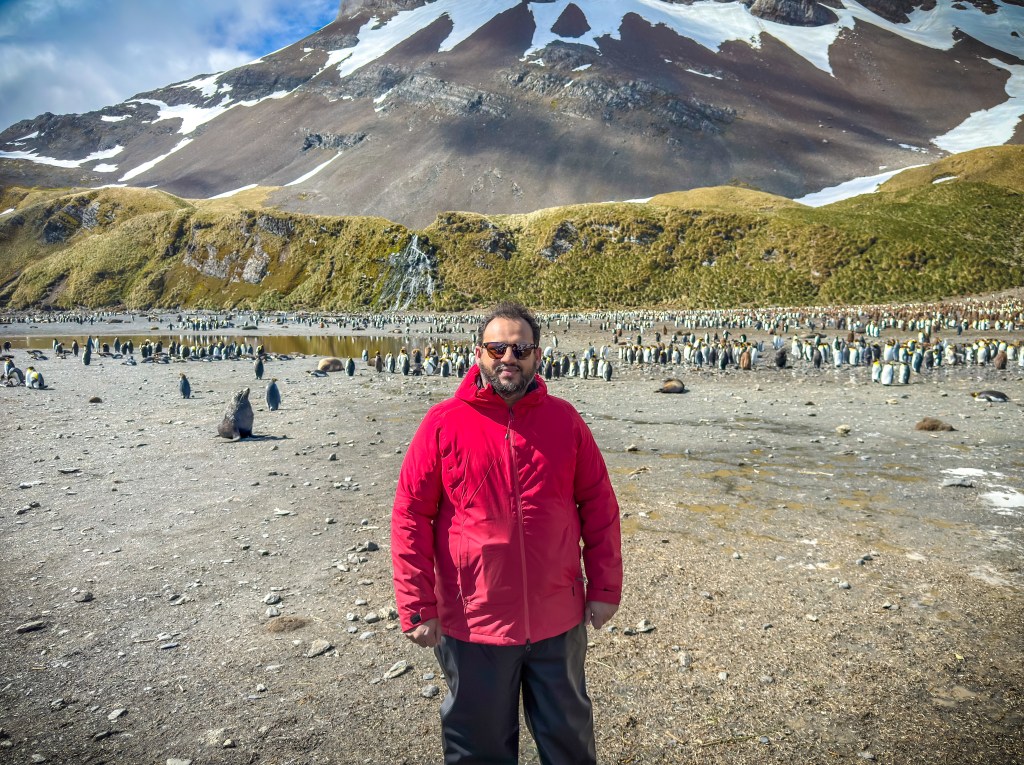
We came ashore for our final landing at Elephant Point. Most of the snow has melted at this point of the season and this was the most greenery we have seen on shore since South Georgia. Piles of molting elephant seals were all over the island. The air would fill with their vocalizations as they argued over sleeping arrangements in their wallows. Gentoo penguins were nesting in several places on the island, and they had freshly hatched chicks. Those that were patient could catch a glimpse at the little ones when their parents would stand up briefly. There were nesting seabirds on the rocky outcrops near the landing site including kelp gulls and Southern giant petrels.

It was a bit emotional to leave the beach one last time. This has been an incredible voyage and our last day in the South Shetland Islands was no exception. We heaved the anchor one last time and began steaming for the Drake Passage and beginning of our journey home.



Day 18 – Monday 23rd December-2024, Drake Passage towards Ushuaia
Our morning wakeup call perhaps didn’t wake some of us. Today was a day to sleep in if we’d like, through the Drake Passage we sailed, with these next two days at sea ahead of us. It was a time to catch up on rest, enjoy some fresh air out on deck, or sort through the thousands of photos we’d taken over the last few weeks. New friendships were blossoming, contacts exchanged, and memories made. We were all really feeling the buzz of just how incredible this trip had been so far. But it wasn’t even over! Today would show us that even on days at sea, you never know what to expect…
We started our morning off with a talk about climate change aptly named ‘Ice Ice Maybe’ by Keechy. We learnt all about melting glaciers, temperature rises and what effect these will have not only on the Southern Ocean and Antarctica, but for the rest of the planet in the future. Antarctica is like Earth’s built in air conditioner; the gigantic white ice sheet that covers the continent deflects a huge amount of the sun’s rays back into the atmosphere (called the albedo effect). This plays a very important role in regulating our global climate.
Before Katyln’s midmorning lecture on whales, we got rudely interrupted by none other than a huge pod of orcas!! We (carefully) raced outside to see at least 20 orcas cruising through the swell, with at least three large males and a few mum and calf pairs.
After lunch, Steffi gave us a very interesting talk about her time competing in what is known as the ‘oldest race in aviation’, the Gordon Bennett Gasballoon Race. Steffi and her teammate flew across Europe, and even over open ocean for days in a gas balloon, using things like bags of sand to control the balloon’s altitude. We learnt so much about this niche sport, and just how passionate Steffi is about the comradery and team spirit that comes with it.
To finish off the lecture program for the day, Chloe gave us an entertaining talk about her time on Antarctic research stations. Chloe first visited Antarctica as a university student down on New Zealand’s research station, Scott Base in the Ross sea. She also got to visit USA’s McMurdo Station which is the largest Antarctic research station on the continent, housing over 1,200 people in the summer season.
After dinner, some of us joined Will in the library for a little jam session on the guitar. Slowly by slowly, the audience started singing along, and it was a cozy little evening of smiles, laughter and some very dulcet tones! For those who may have slept in this morning, made up for it by the main lounge not clearing until well past midnight!
Day 19 – Tuesday 24th December-2024, Drake Passage towards Ushuaia
“Naaaaaaaaaaaaaaants ingonyamaaaaaaaaaaaa bagiiiiiiiiiiiiithi baba…”
The wake up call had a disney ring to it as the Lion King song woke us from our slumbers bringing us bak to warm family movie nights. Doug, the leader of our beloved birders won the bidding contest during the auction a few days ago to make his own wake up call.
After a wonderful awakening the day could only be good. The sea tried it’s best to ruin our good mood by throwing 50knots wind gusts and five meter waves. Some of us nested in our cabins waiting for a respite scheduled to arrive later that day.
This morning was dedicated to get to know what our expedition team does when off the ship. Koen started by telling us about his job as a whale guide in both Iceland and Tonga. He showed us some amazing footage of his underwater encounters with humback whales and Orcas.
Later Adam continued and introduced us to how life is on South Georgia and on an Antarctic research station. Great to get first hand insight on life in these remote areas and how one ends up doing such a thing!
A documentary was showed later that day about the ancient mariners braving the treacherous waters of Cape Horn.
Day 20 – Wednesday 25th December-2025, Drake Passage towards Ushuaia
We arrived in Ushuaia, Argentina and it was time to say our goodbyes and a last chance to exchange contact details. We had our final breakfast aboard Plancius then gathered the last of our things and headed for the gangway. We said goodbye to the whole team onboard and the new friends we had made. Some of us were off to explore some of the town’s treasures while others were flying straight home, looking back as we left to take a final look at the Plancius, remembering good times and perhaps planning for more in the future.
Total distance sailed on our voyage: 3357nm
Southernmost position: 64°41.1’S, 062°10.3’E

 Tulan Hayat
Leave a comment