
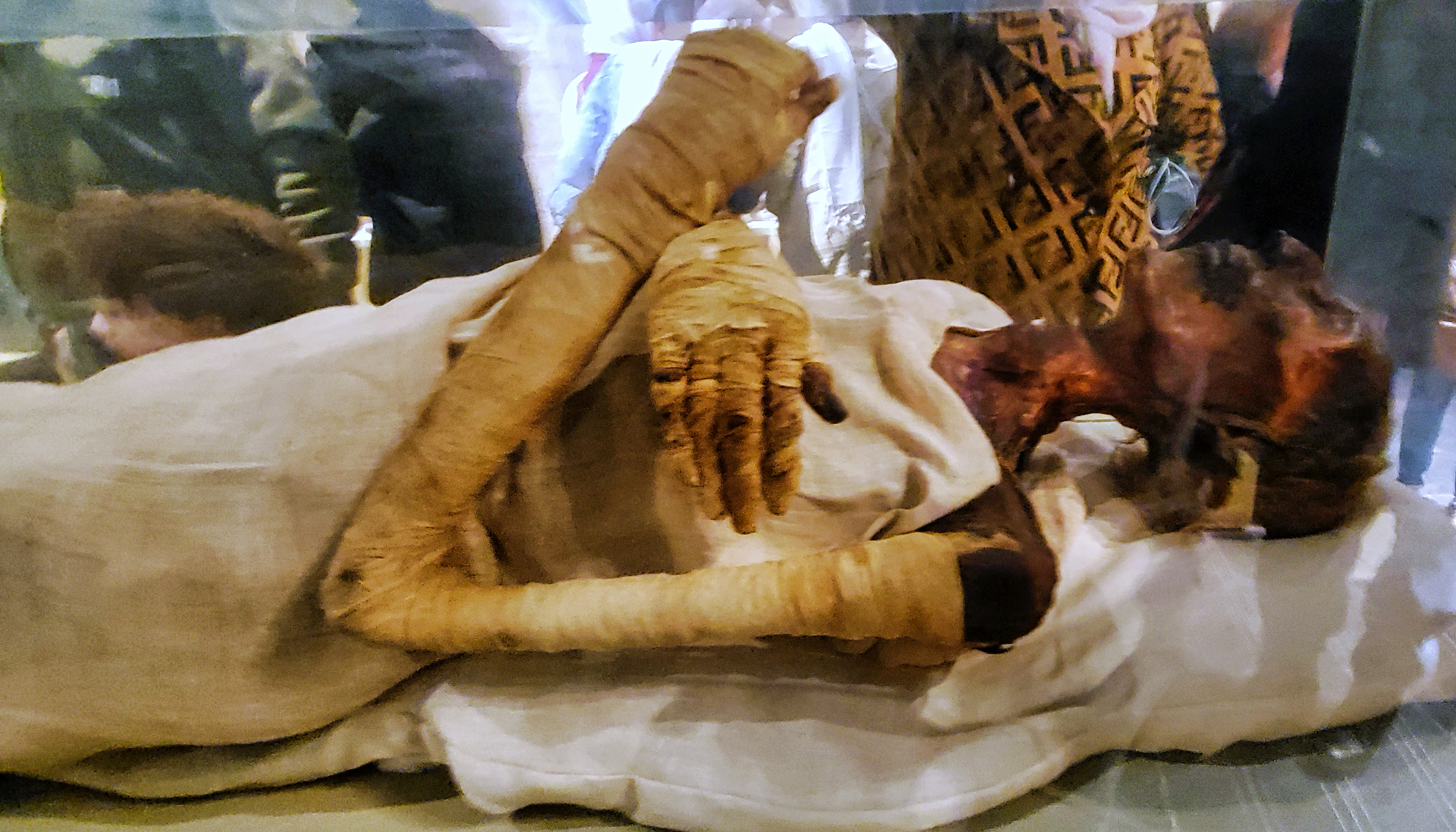
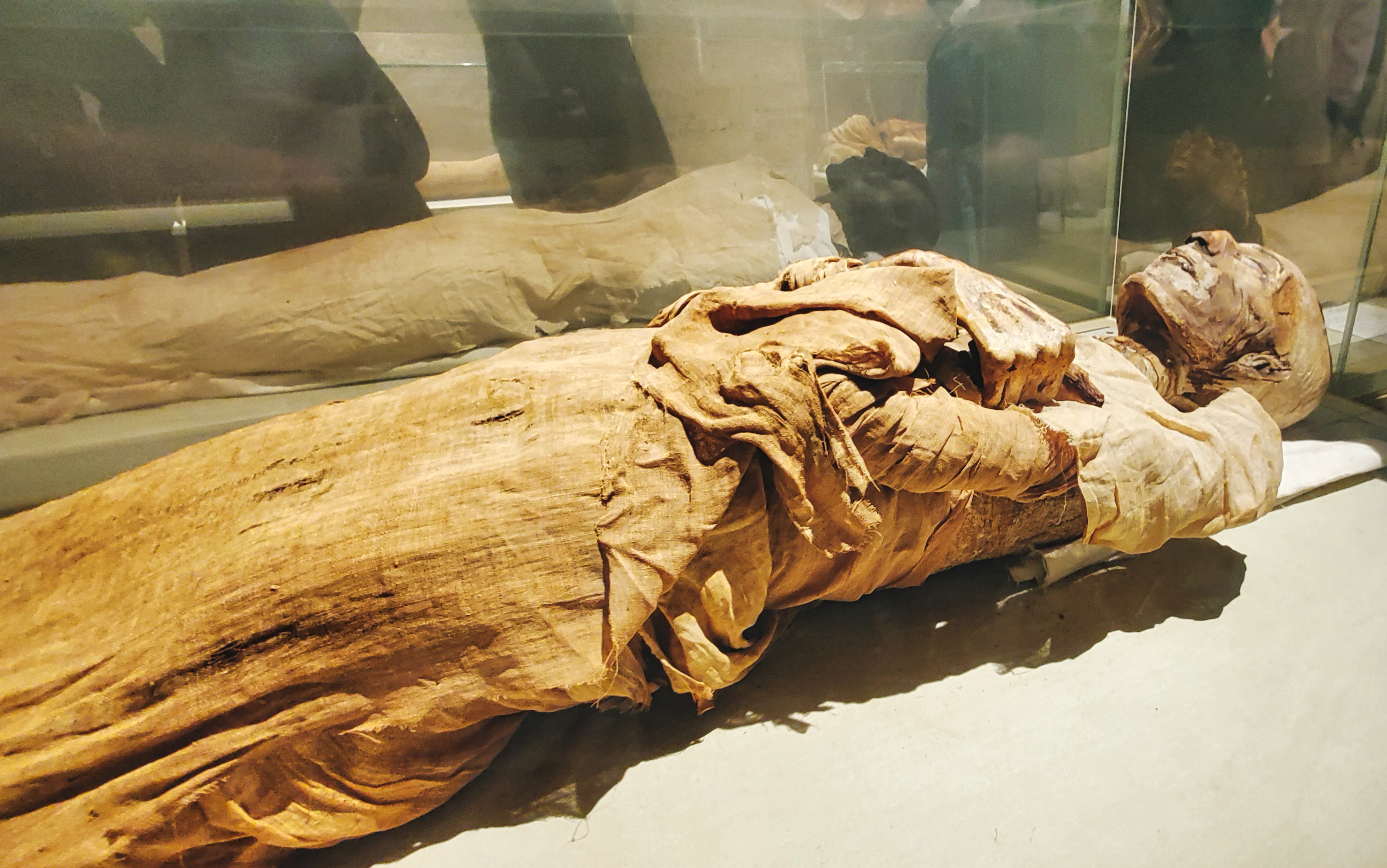
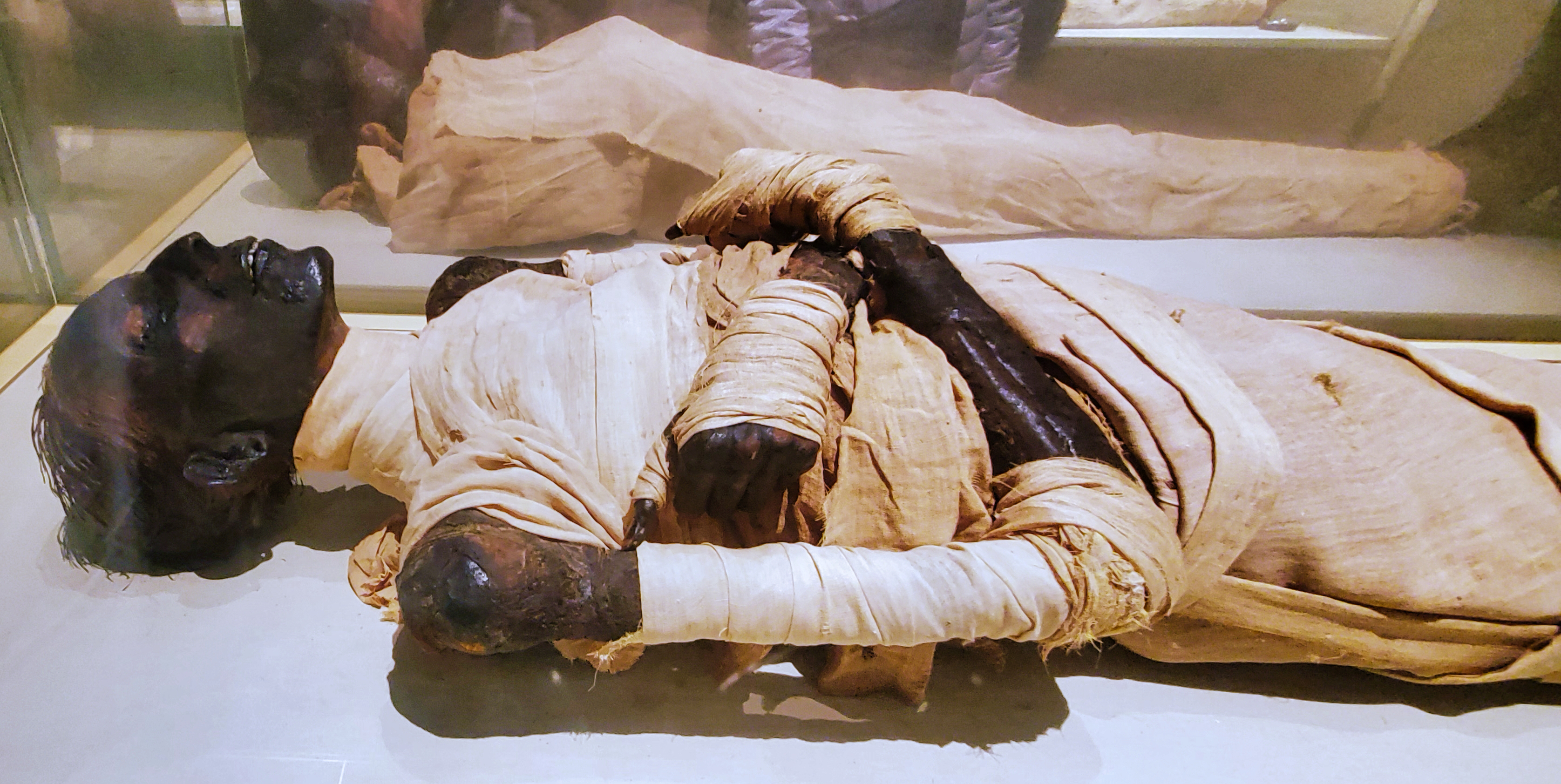
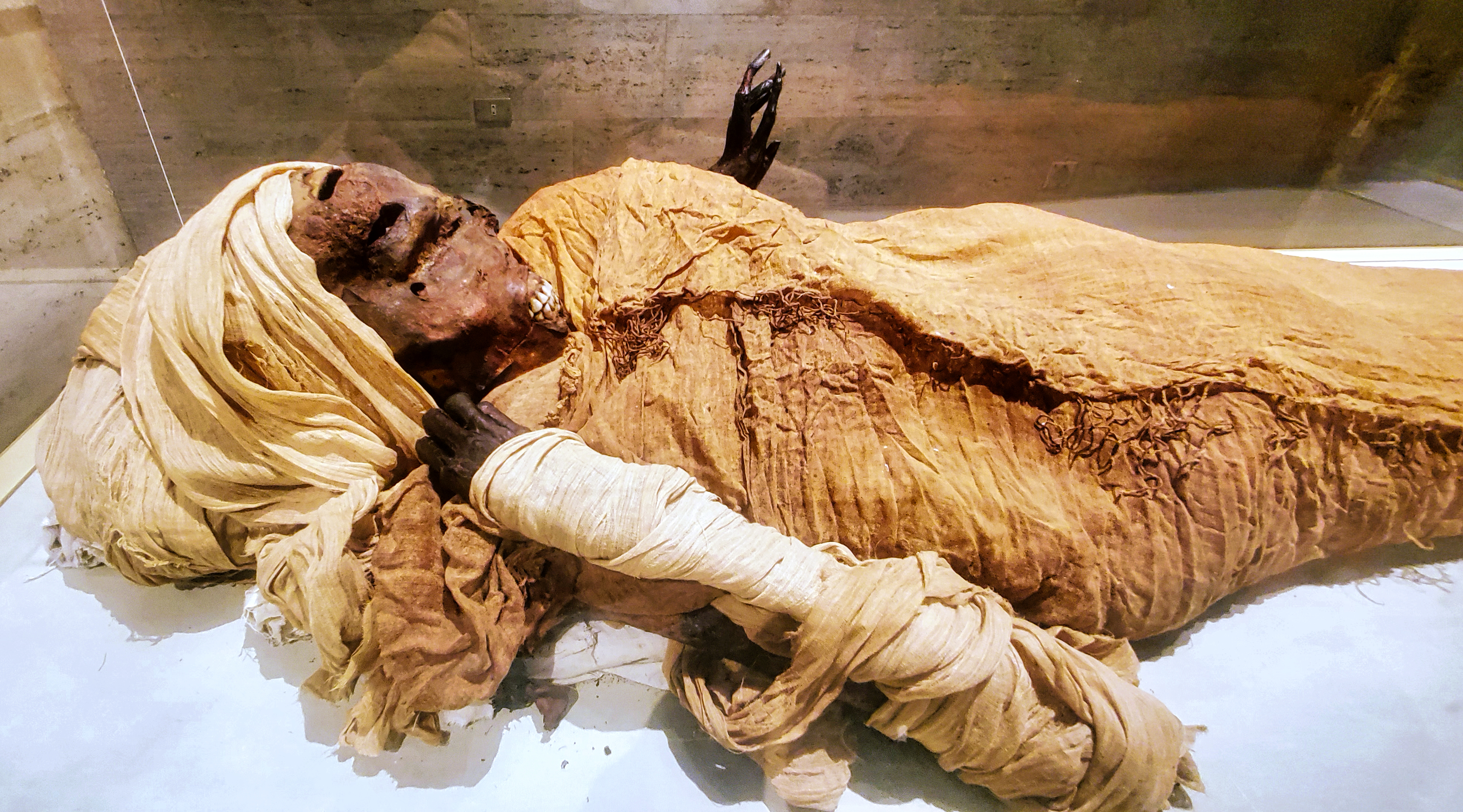
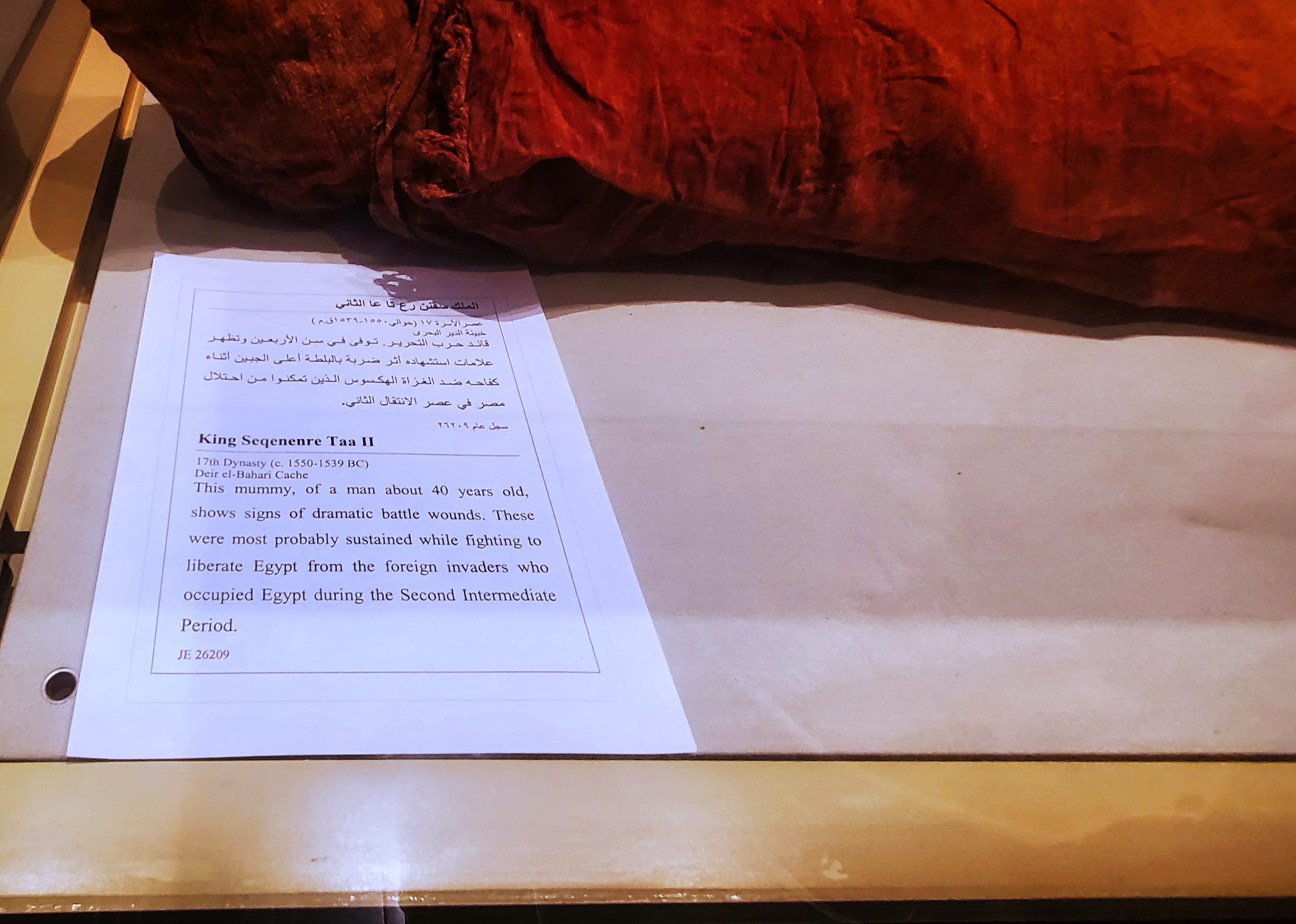
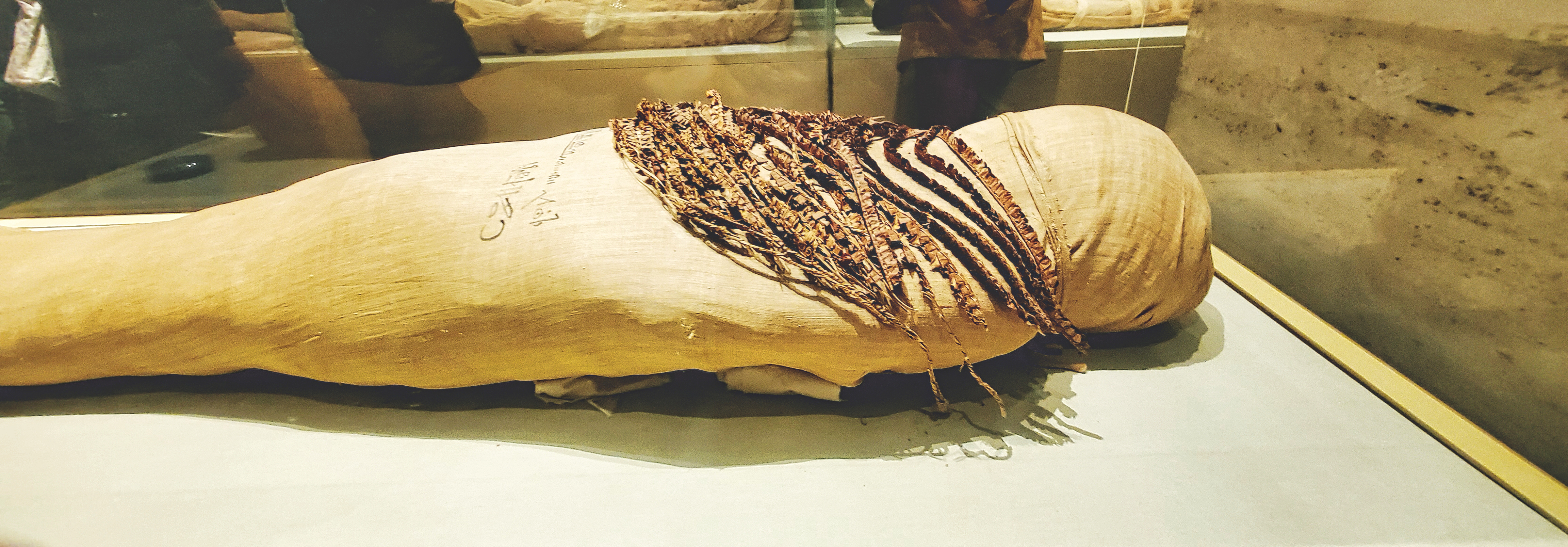
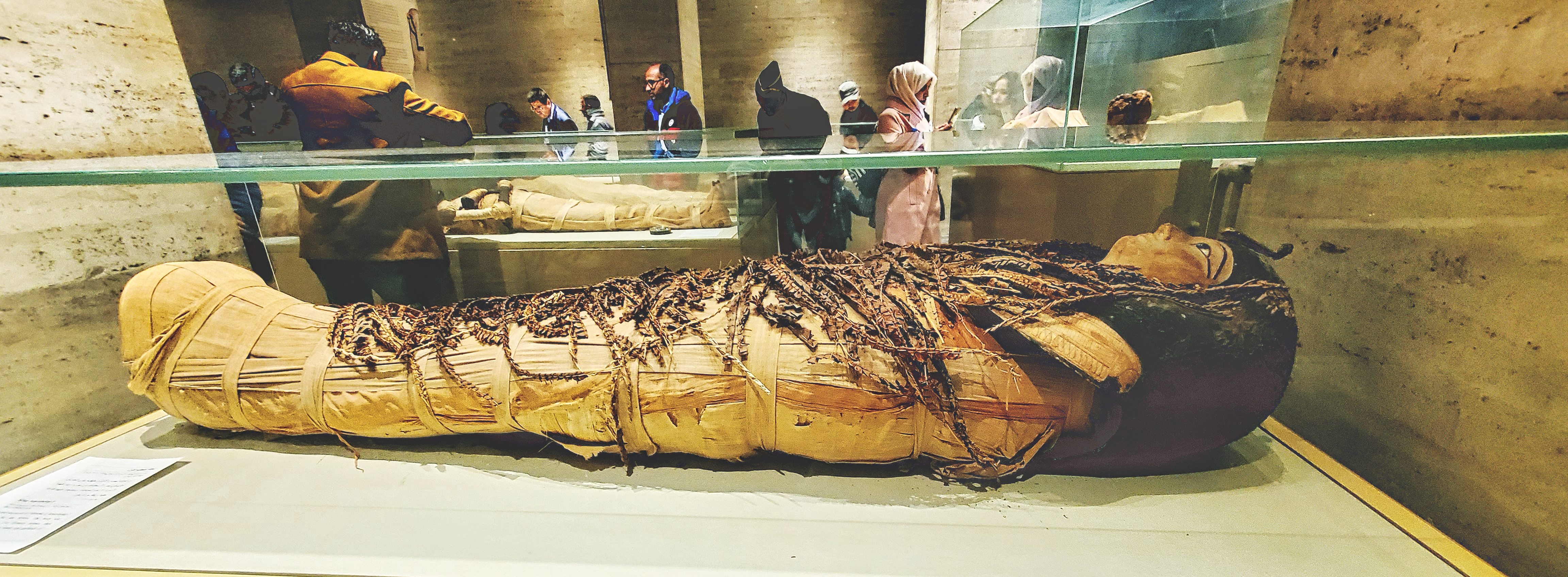
Considered the crown jewel of the museum, the Royal Mummies Hall is specially designed to display the mummies of the ancient Kings and Queens of Egypt. The design aims to give the visitor the feeling of strolling down the Valley of The Kings, where most of these mummies were originally resting. The hall includes 20 Royal mummies, 18 kings and 2 Queens, from the 17th until the 20th dynasty. The most famous mummies are Hatshepsut (Maatkare), Thutmose III and Seqenenre Taa II.
The discovery of the Royal Mummies of the New Kingdom was one of the greatest and most unexpected discoveries in the history of archaeology. On this particular occasion, the discovery did not involve the usual architectural and artistic masterpieces, but the sacred bodies of the builders of Egyptian civilization during the New Kingdom. These were the same builders that believed in life after death and devoted a large part of their wealth to defeating death.
In accordance with their beliefs, they preserved their bodies for the sake of their souls. They constructed their tombs within the cliff of the valley on the West Bank of the Nile, near their ancient capital at Thebes, and equipped them with all the necessary objects for life after death. The tombs’ entrances were then blocked and the chambers were hidden in order to allow the mummies to be preserved for eternity and carry out their role as a home for the soul in the Afterlife.
The mummification process was focused on the religious aspect of Egypt. The concept of death is highly regarded in ancient Egypt and for the pharaohs, it was viewed as a way to join the Gods. The ancient Egyptians used the mummification process to prepare their dead for the afterlife. The process involved the use of special tools and techniques for several days so that all the moisture is removed from the body leaving only a dried corpse and special priests would treat and wrap the body with a linen cloth and put within his or her grave with selected artefacts and a copy of a book of the dead which held many enchantments and protection spells. The mummies are hard to decay and can be viewed in the Egyptian Museum Mummy Room at any time.
The Deir el-Bahari cache
In this cache, they had found forty royal mummies, amonth them, the most famous kings of the New Kingdom. Found in this cache was the mummy of the famous Pharaoh Seqenenre Taa II, ruler of the 17th Dynasty and who died in a battle defending his country against the Hyksos. The cache also contained bodies of Ahmose I (the liberator of Egypt), Amenhotep I, Thutmose I, Thutmose II, Thutmose III, Seti I, Ramesses II the builder of great monuments such as Abu Simbel, Remesses III, and Ramesses IX. These kings ruled during the 17th to 21st Dynasties. Queens also were found among them, including Ahmose Nefertari (wife of Ahmose I).
The Tomb of King Amenhotep II cache
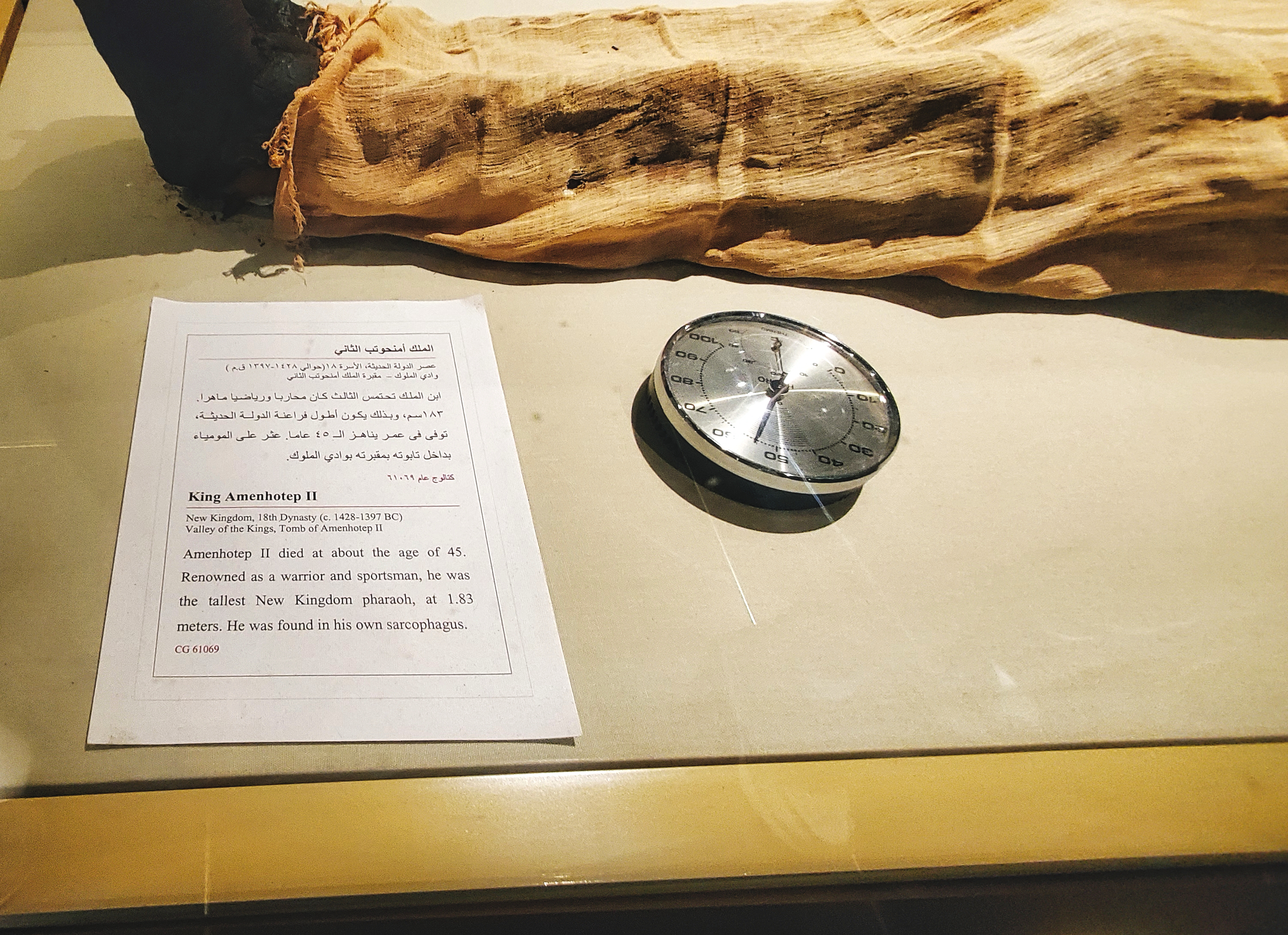
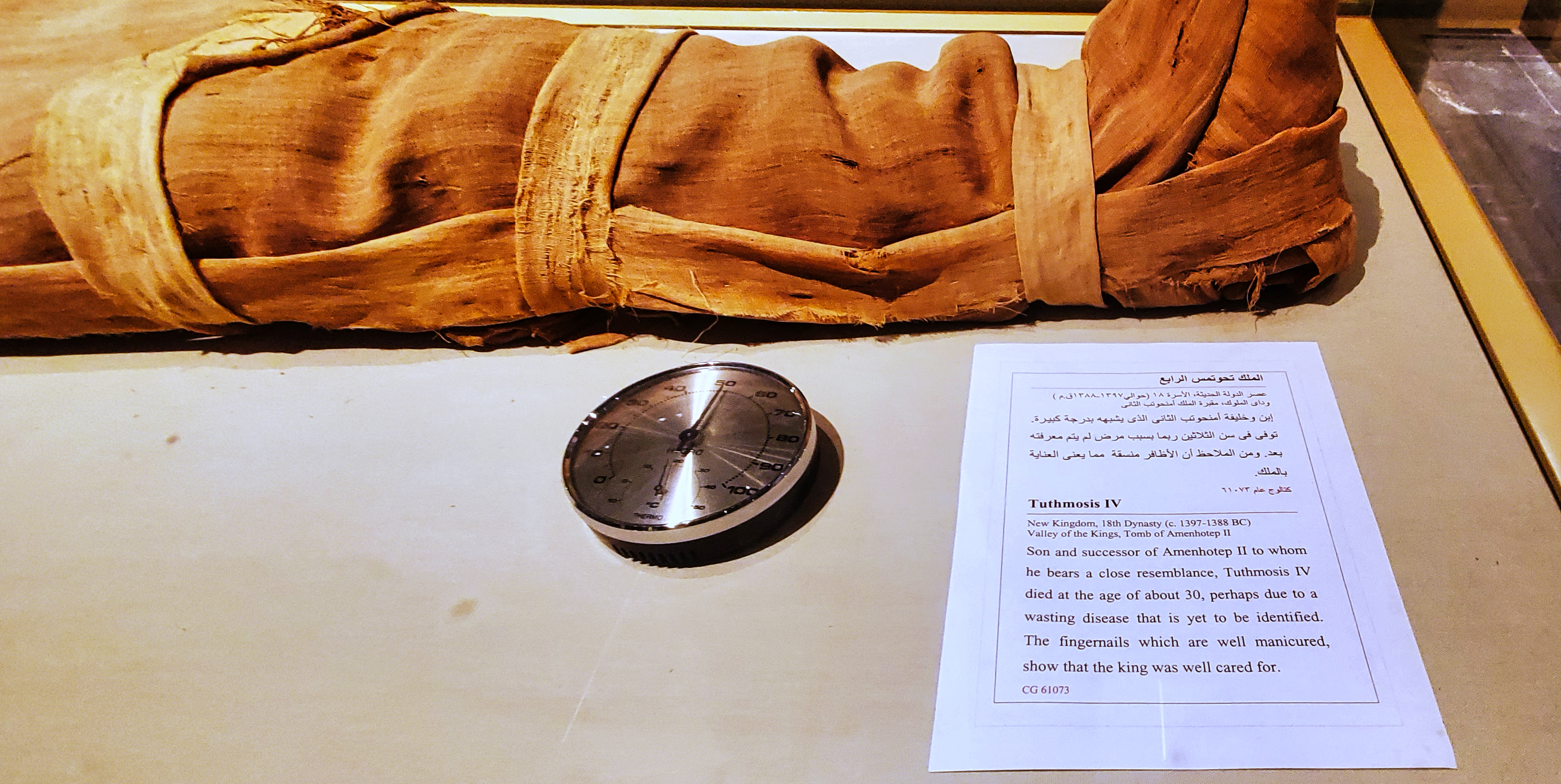
Another important cache was to be discovered, seventeen years after the cache at Deir el-Bahari. In 1898, Victor Loret, a French Egyptologist, discovered the tomb of King Amenhotep II in the Valley of The Kings. It had another treasure of the Royal Mummies. Amenhotep II, a King of The Eighteenth Dynasty, was found resting in the sarcophagus and with him lay the famous bow. In another chamber, which had been selected by priests of the Twenty First Dynasty as a hiding place, he found thirteen mummies including nine kings. Among them were Thutmose IV and Amenhotep III of the Eighteenth Dynasty, Merenptah, Seti II and Siptah of the Nineteenth Dynasty, and Ramesses IV, V and VI of the Twentieth Dynasty.











 Tulan Hayat
Leave a comment