
First Time in Bali – What to Do Bali Survival Guide

Me and the Wifey visited Bali recently and here are the best travel tips we picked up along the way:
Upon arriving in Bali’s Denpasar Airport:(Ngurah rai international airport)
- Entry visas are NOT required for Bangladeshi nationals who stay for 30 days
- Anything longer, beyond 30 days, costs $25
- Be prepared to stand in line if too many planes land at the same time (bathrooms are to your right)
- Hire a car & driver, upon arrival, you will be greeted by taxi companies who charge different rates to the different spots. You have to be judicious. Taxy fare from companies range between 2,00,000 to 3,00,000 rupiah ($15-$30)
- Dont change much cash at the airport as the rate will be low. (just enough to cover the way to the hotel/resort/you place of stay)
- If you dont want to hire taxi service from the companies, there are private taxis just outside the arrival hall (you have to bargain really hard as they ask hilarious prices. One guy asked $50 and I said its so less. The price is $100 you are giving me 50% discount. Finally someone agreed to go at 1,50,000 rupiah, about $10)
- Make sure you change money on the way to the hotel or villa or your place of stay as they will charge the entire money upon arrival and they take in rupiah only. (changing inside the hotel you will be given even less amount)
In Bali:
- $1 US = 14,500 rupiah (Rp.)
- Bring something portable in which you can safely keep a whole lot of rupiah
- Try not to spend your entire vacation in Southern Bali tourist areas of Kuta, Seminyak, Jimbaran or Nusa Dua…or you’ll learn more about Australians and Europeans than you will about the Balinese
- Brush up on a few words and phrases in Balinese so you can at least tell local people that things are good or pretty, beg their pardon, greet them in the morning and afternoon, and bid them goodnight
- If you’re planning to enter a temple, both men and women should have sarongs on hand to keep legs covered, and shoes should be removed; at some temples, but not all, you can borrow or rent sarongs
- Cats, monkeys, and cows are sacred, and protected from harm by law
- Don’t ask for beef; Bali is almost entirely a Hindu-Buddhist country, and — see above
- If you’re know you’re going to a monkey forest/temple, consider wearing closed-toe shoes to avoid having your toes bitten, and don’t bring food that you’re not prepared to have taken away from you…by monkeys
- You can pet cats all over Bali, but don’t ever put your hand out to a strange dog; they’re trained and kept by Balinese families exclusively for home security, and trust only their families and the people they know
- Traditional Balinese food is difficult to find in tourist-friendly restaurants; it’s far more likely that you’ll find general Indonesian specialties. To enjoy specifically Balinese cooking, which is generally home-based, arrange to take a cooking class through your hotel or a local restaurant (Bumbu Bali,Casa Luna, Puri Lumbung) or ask a local for a recommendation to their favorite small cafe, or warung
- Bring insect repellent if you even think you might go for a walk in the woods or jungle
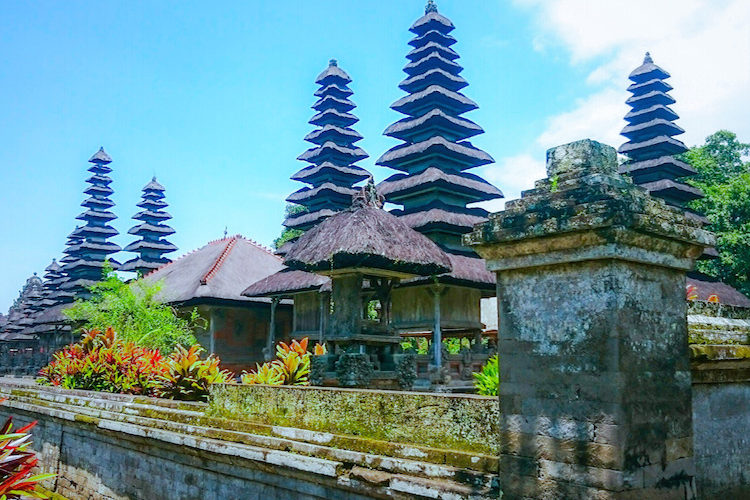
Your first time in Bali can be smooth and memorable, you only need to know where to start. We’ve come up with this ‘Bali survival guide’ to help you get the best out of your first visit to this world-favourite holiday island. Bali’s the tourism hub of the whole Indonesian archipelago, and with good reason. It’s true the island is a surfers’ and beach lovers’ paradise. It’s packed with sightseeing attractions, too. Almost everywhere you go in Bali, there’s ancient temples, palaces and unique landmarks to discover. In each resort area, you can browse through shopping streets for a bargain. The same can be said for the nightlife scene, as well. There’s a lot to enjoy, but here we’ve narrowed down the choices. With this quick Bali survival guide, you can get the most out of your first time in Bali.
A short trip to Bali will never allow you enough time to enjoy all Bali has to offer. The island’s countless temples, historical sites, and spots of natural beauty are spread across its eight regencies. In between, there’s fun and excitement to be had through various activities. You might as well be enjoying the beachfront of your hotel throughout most of your short visit. But if you’re willing to explore, we recommend you see or do at least these three on your first time in Bali.
Tanah Lot Temple in Bali
Bali’s Scenic Sea Temple


Legend of Tanah Lot Dang Hyang Nirartha, a high priest from the Majapahit Kingdom in East Java who travelled to Bali in 1489 to spread Hinduism, arrived at the beautiful area and established a site honouring the sea god, Baruna. Here, he shared his teachings to Beraban villagers, only to face opposition from the village chief who soon gathered his loyal followers to dispel Nirartha. The priest resisted, incredibly shifting a large rock he meditated upon out to sea while transforming his sashes into sea snakes to guard at its base. The rock’s original name, Tengah Lod, means ‘in the sea’. Acknowledging Nirartha’s powers, the humbled chief vowed allegiance. Before setting off, Nirartha gifted him a holy kris dagger, which is now among the sanctified heirlooms of the Kediri royal palace. Pilgrims bring these relics each Kuningan day by foot on an 11km pilgrimage to the Luhur Pakendungan temple, the priest’s former meditational site.
Tanah Lot Highlights and Features
After centuries of large waves persistently crashing at its rock base, Tanah Lot faced the constant threat of erosion, reaching a significant decline in 1980. The authorities carried out preservation efforts to Tanah Lot and other historical sites island-wide with aid from the Japanese government. Fully restored, a third of the present Tanah Lot is actually artificial rock. At high tide, waves flood the causeways making it impossible to cross. At low tide, you may cross to view the rock base where the legendary ‘guardian’ sea snakes dwell in crevices around the Tirta Pabersihan fountain. This natural spout is the source of holy water for all the temples in the area. Priests at the fountain bless visitors by sprinkling holy water over their heads. You can cup your palms and take a sip to prove it is amazingly fresh water. Onshore temples include the Penyawang, a spiritual proxy to Tanah Lot that hosts pilgrims when the main offshore temple is inaccessible during high tide. Other smaller temples around the site host prayer sessions for various aspects of the villagers’ agrarian life, from good rice harvests to rites of passage. North of Tanah Lot is Batu Bolong, similarly built on a rock formation with a ‘hollow’ overpass linking to the mainland. Convenient pathways and well-kept tropical gardens line the grounds from Tanah Lot to Batu Bolong, with resting spots offering shades and good viewpoints to both outcrops. Art shops selling souvenirs and curios of all sorts line the pathway from the parking area to the temple, also with peddlers selling traditional snacks such as jaja kelepon –yummy, must-try palm sugar-filled gelatinous balls rolled in grated coconut.
Good to Know and What Not to Miss
30 September 2020


Taman Ayun Temple in Bali
Taman Ayun Temple is a landmark in the village of Mengwi, Badung regency, located 17km northwest of Denpasar. This temple complex boasts magnificent traditional architectural features throughout its courtyards and enclosures as well as expansive garden landscapes comprised of lotus and fish ponds. The temple was built circa 1634 by the then ruler of the Mengwi kingdom, Tjokerda Sakti Blambangan, with Chinese architectural inspirations, and underwent a significant restoration project in 1937. Towering tiers from the temple shrines make up most of the profile of Taman Ayun and are a gesture of the people of Mengwi’s reverence to their deified noble ancestors, for the temple complex is considered the ‘mother temple’ of Mengwi. The Taman Ayun Temple was to serve as a main site of worship among the Mengwi people who need not travel too far to the main large temples, the likes of the Besakih ‘mother temple’ in Karangasem, Batukaru Temple in Tabanan, or Batur Temple in Kintamani. It also served as a unifying symbol among the Mengwi royalty and the people.

The Taman Ayun Temple complex comprises four different divisions, one ranking higher than the other. The first is referred to as the ‘Jaba’ or outer division, accessible only through a single entrance and walkway over the ponds. Inside, near the entrance is a small guardian shrine and on the right is a large ‘wantilan’ hall where the communal gatherings take place. A tall fountain with spouts jutting up and out to the cardinal directions can be seen in this area. Onto the next court, a small temple compound by the name of Pura Luhuring Purnama can be seen. The second and third terraces are slightly higher than the first. To enter, visitors must go through a second gate where a shelter called Bale Pengubengan greets them with ornamental features that depict the nine Hindu gods that guard the nine points of the compass, referred to as Dewata Nawa Sanga. East of this court is a small temple called Pura Dalem Bekak, while in its western corner is an eight metre-high wooden bell tower known to locals as ‘Bale Kulkul’. A climb up will reveal two hanging rectangular wooden bells, plus a high and spectacular view of the whole complex.
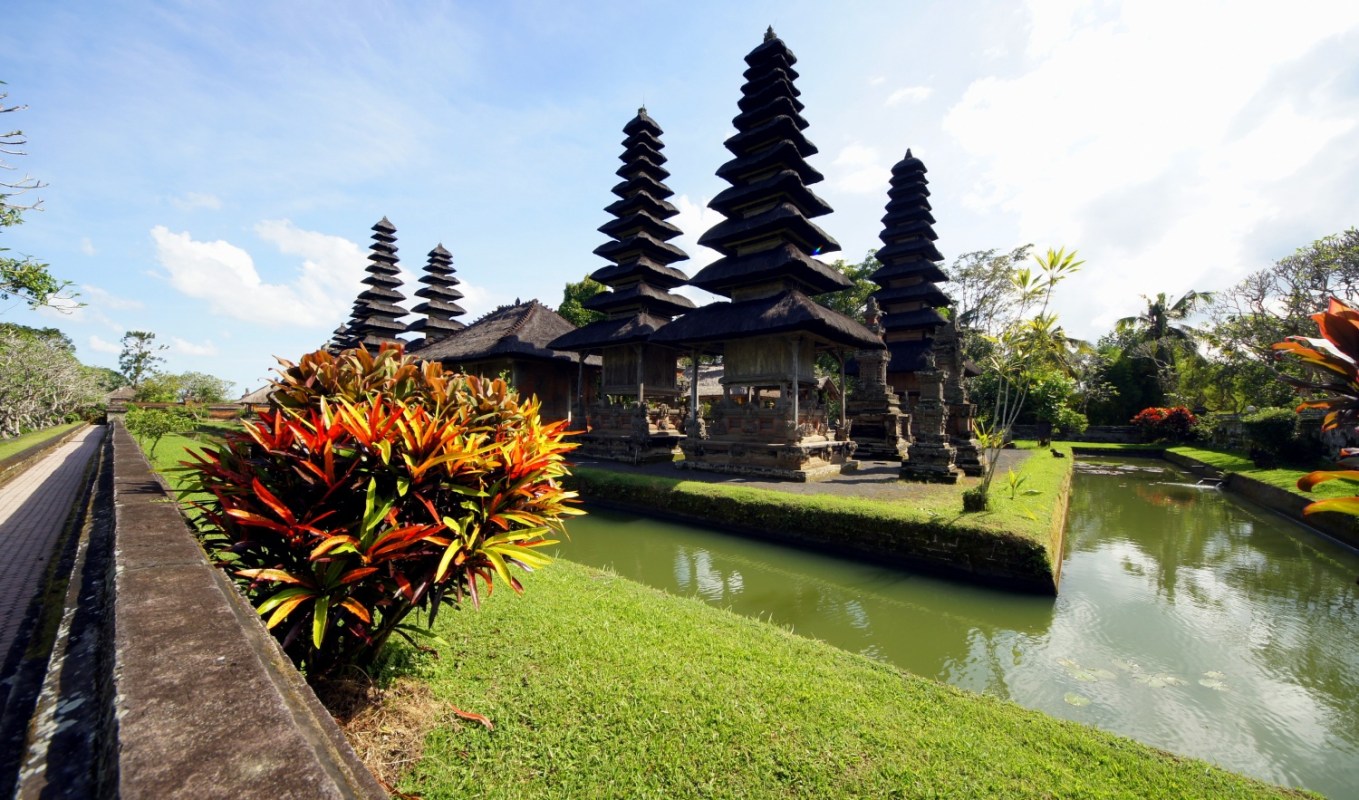
Taman Ayun Temple Hightlights
The fourth and last court is considered the most sacred, thus ranks the highest. It is referred to as the Utama Mandala. The intricately ornate central gate is open only during ceremonies, as the entryway for consecrated heirlooms and other ceremonial paraphernalia. Another gate at its east is for daily access. Several tiers of different outlines and sizes rise up into the temple’s skyline. The temple’s three grounds denote the three cosmological levels known to Balinese Hinduism, namely the world of man, the realm of gods and deities, and the topmost divine level. As recounted in the ancient texts of the ‘Adhiparwa’, the whole complex of the Taman Ayun Temple represents Mount Mahameru in the so-called ‘churning of the sea of milk’ or the cosmic formation of the world. The name ‘Taman Ayun’ translates as ‘beautiful garden’. The vast encircling pools were once royal recreational places for the palace maids who would sail small canoes. Now the pools and ponds are fenced and visitors are denied entrance.
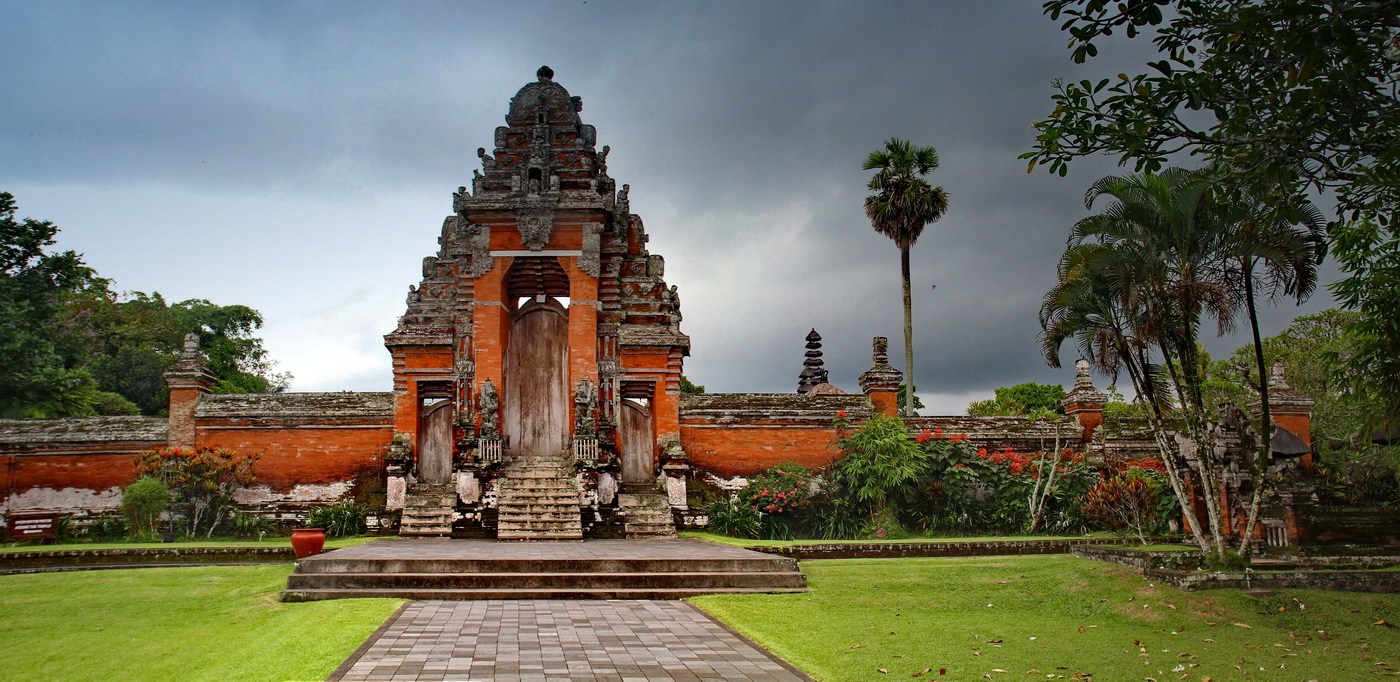
Good to Know about Taman Ayun Temple
Entrance fee to the Taman Ayun Temple is a modest Rp. 3,000-4,000. The temple shares the same anniversary day of the cliff-perched Uluwatu Temple on the island’s southern Bukit peninsula, which is celebrated on the 210-day Balinese Pawukon calendar system or on every ‘Kliwon Medangsia’ Tuesday. The ‘piodalan’ temple anniversary celebrations see pilgrims flock to the temple complex, day and night. A trip to the Taman Ayun Temple complex is usually an included itinerary for long journeys up to the central or northern Bali regions. It is particularly a frequent stopover for visitors who opt to spend time up in Bedugul, as the site is conveniently en route from southern Bali. It is a great place to marvel at the early and traditional Balinese architectural features that prevail on the island. Although the pools are far from what can be imagined during its days of glory in the distant past, the moss-lined walls and jade algae-filled water add to the rustic charm of the whole scenery of this over three centuries-old temple site. North of the bell tower is a pavilion called Bale Loji. In old times, this was where priests and ceremonial attendants would make preparations and take a break. Nowadays, artists can be seen here busy at their art-in-the-making. Paintings are also available here for purchase. Museum Manusa Yadnya is located just across the road from the temple site. The museum showcases Balinese Hinduism rituals and human rites of passage, throughout their stages of life. It is an often convenient and additional highlight on each visit to Taman Ayun. Taman Ayun Temple Opening Hours: 09:00-16:00 Location: Village of Mengwi, Badung regency, approximately 17km northwest from Denpasar. How to get there: Follow the main road north from Denpasar along the common Jalan Kapal thoroughfare towards Bedugul. Upon reaching Mengwi, the landmark can’t be missed.
Uluwatu Temple – Pura Luhur Uluwatu

Uluwatu Temple, or Pura Luhur Uluwatu, one of six key temples believed to be Bali’s spiritual pillars, is renowned for its magnificent location, perched on top of a steep cliff approximately 70 metres above sea level. This temple also shares the splendid sunset backdrops as that of Tanah Lot Temple, another important sea temple located in the island’s western shores. Pura Luhur Uluwatu is definitely one of the top places on the island to go to for sunset delights, with direct views overlooking the beautiful Indian Ocean and daily Kecak dance performances. Balinese architecture, traditionally-designed gateways, and ancient sculptures add to Uluwatu Temple’s appeal.
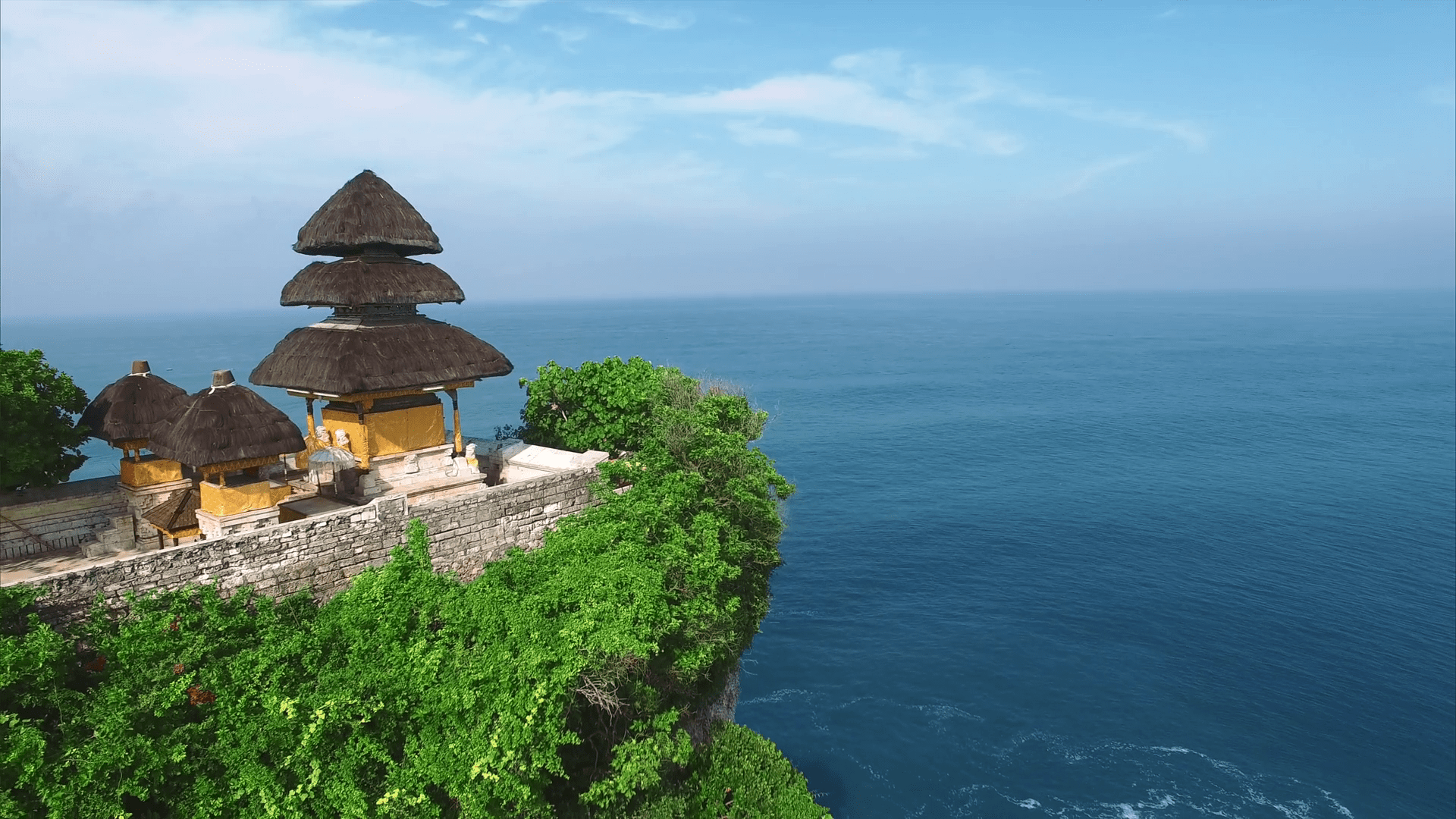
Without a doubt, what makes Uluwatu Temple spectacular is its cliff-top setting at the edge of a plateau 250 feet above the waves of the Indian Ocean. ‘Ulu’ means the ‘top’ or the ‘tip’ and ‘watu’ means a ‘stone’ or a ‘rock’ in Balinese. Several archaeological remains found here prove the temple to be of megalithic origin, dating back to around the 10th century. There are two entrances to Uluwatu Temple, from the south and the north. A small forest lies at the front and hundreds of monkeys dwell here. They are believed to guard the temple from bad influences. The serpentine pathway to the temple is fortified by concrete walls on the cliff side. It takes about an hour to get from one end to another as there are several fenced points along the way to stop. The views from the bottom of the water surging up against rocks and the ocean horizon are remarkable. The Balinese Hindus believe that the three divine powers of Brahma, Vishnu, and Siva become one here. That belief results in making Uluwatu Temple a place of worship of Siva Rudra, the Balinese Hindu deity of all elements and aspects of life in the universe. Pura Uluwatu is also dedicated to protect Bali from evil sea spirits.
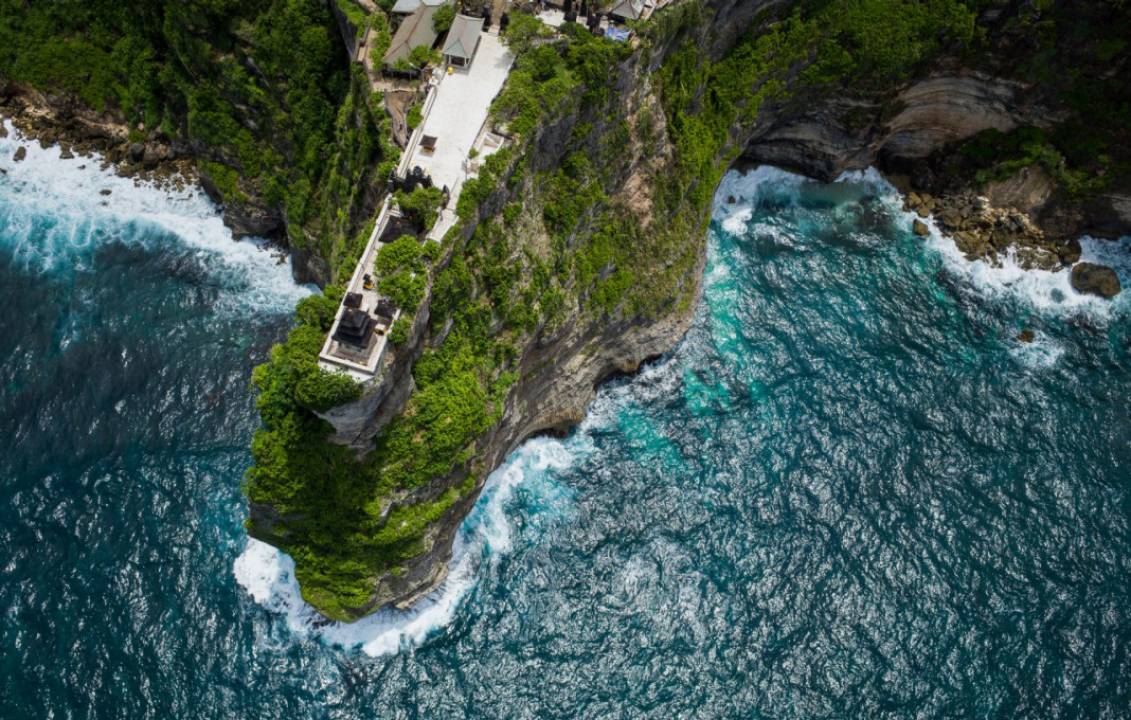
History Inscriptions mention that Uluwatu Temple was instigated by Mpu Kunturan, a Majapahit monk who also participated in establishing several other important temples in Bali such as Pura Sakenan in Denpasar, about 1,000 years ago. A holy priest from eastern Java, Dhang Hyang Dwijendra, then chose Uluwatu Temple to be his spiritual journey’s final worshiping place. Balinese Hindu devotees believe that he reached the highest spiritual point of oneness with deities by a strike of lightning and completely disappeared. Legend, however, says that Dhang Hyang Dwijendra (also frequently referred to by name as Danghyang Nirartha) was the architect of Uluwatu Temple and several other temples in Bali, Lombok, as well as Sumbawa. Until 1983, Pura Uluwatu was hardly accessible and a lightning strike in 1999 set some parts of the temple on fire. The temple has had some restorations since it was first built.
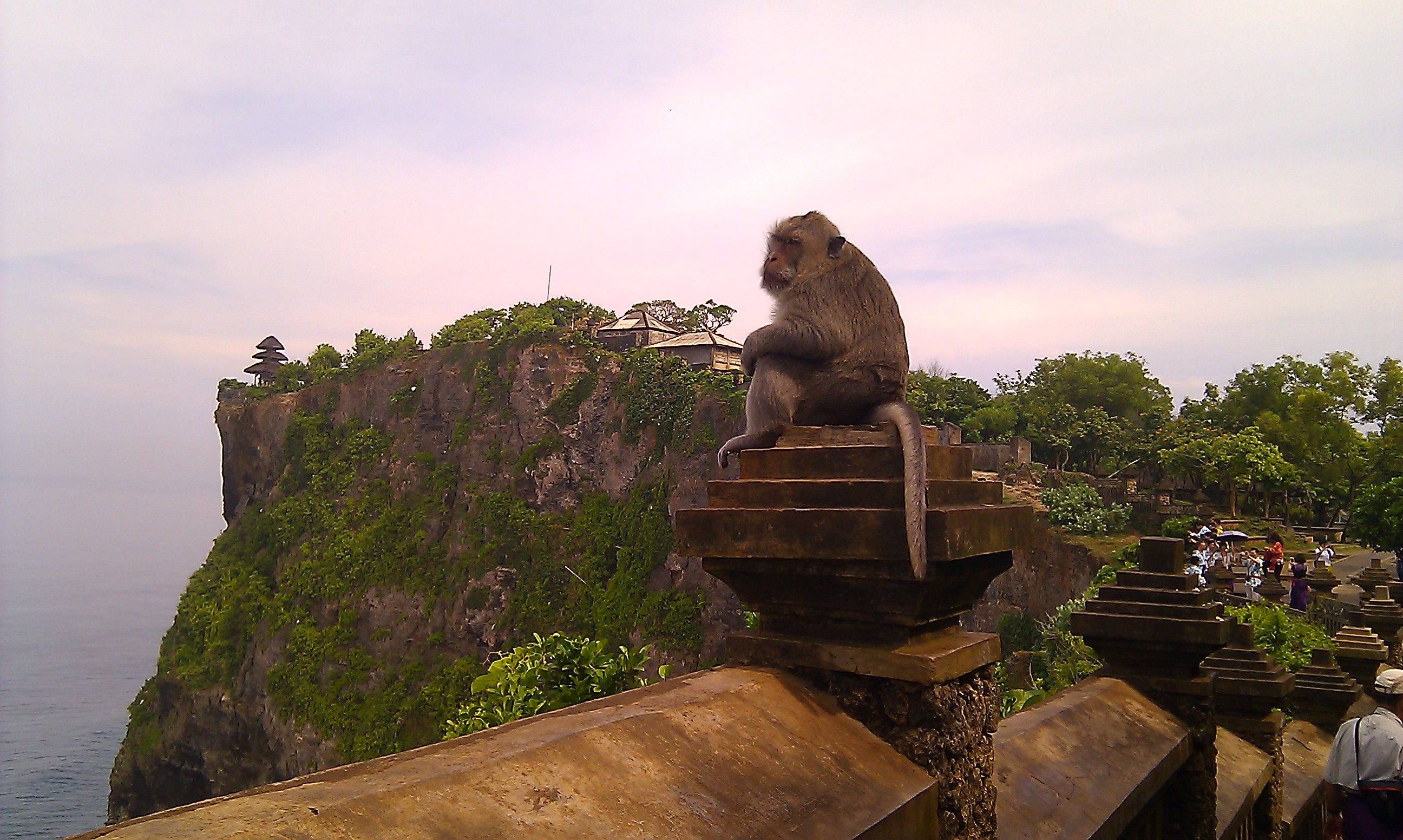
As a place of worship however, it is open 24 hours daily. Location: Pura Uluwatu is located in Pecatu Village, Kuta sub-district, Badung regency, about 25km south of Kuta and it usually takes around one hour to get to and from there. How to get there: Take the bypass main road to Nusa Dua and to Jimbaran and then follow the ascending road up to Uluwatu.
Tegallalang Rice Terraces in Bali
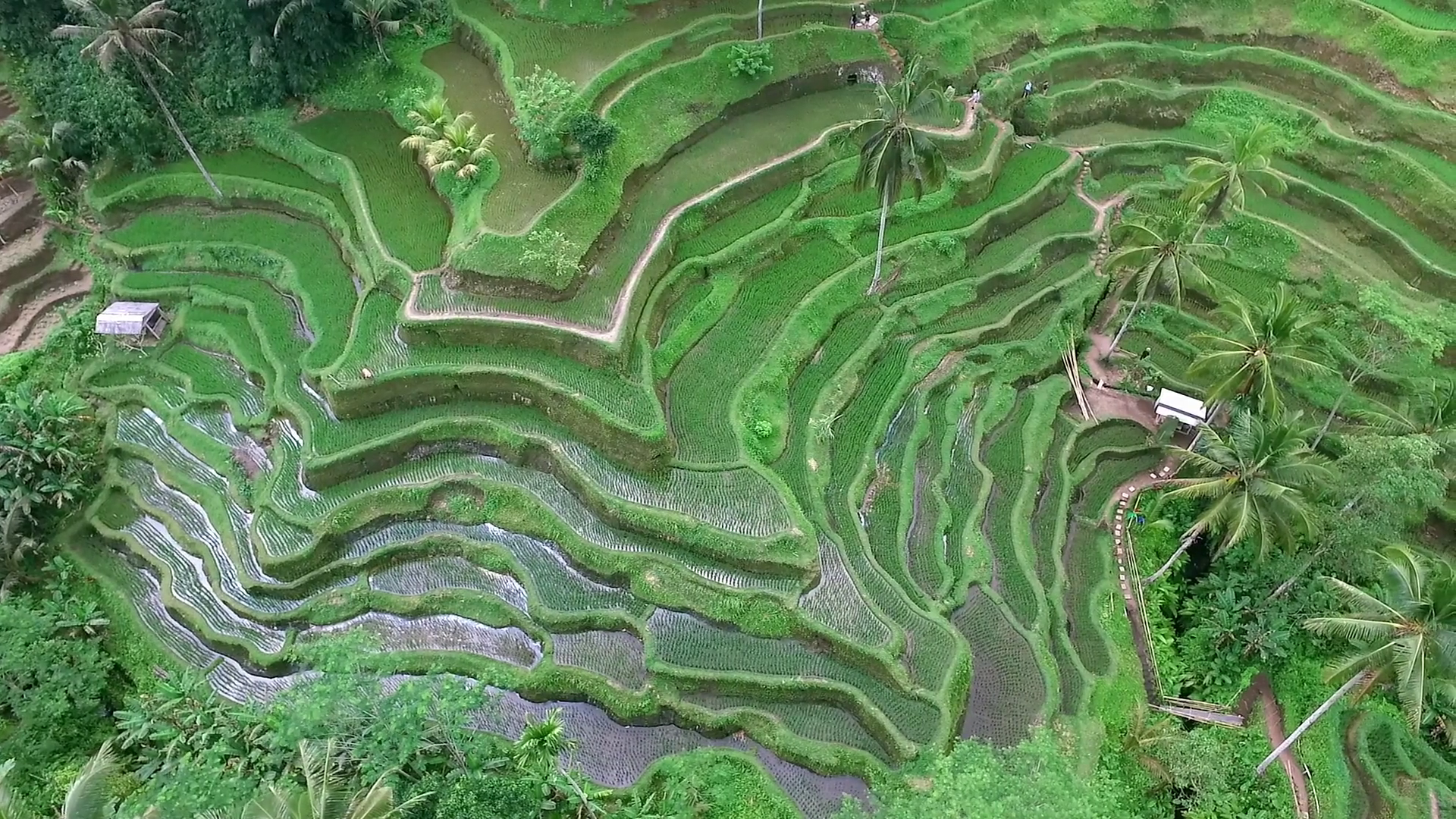
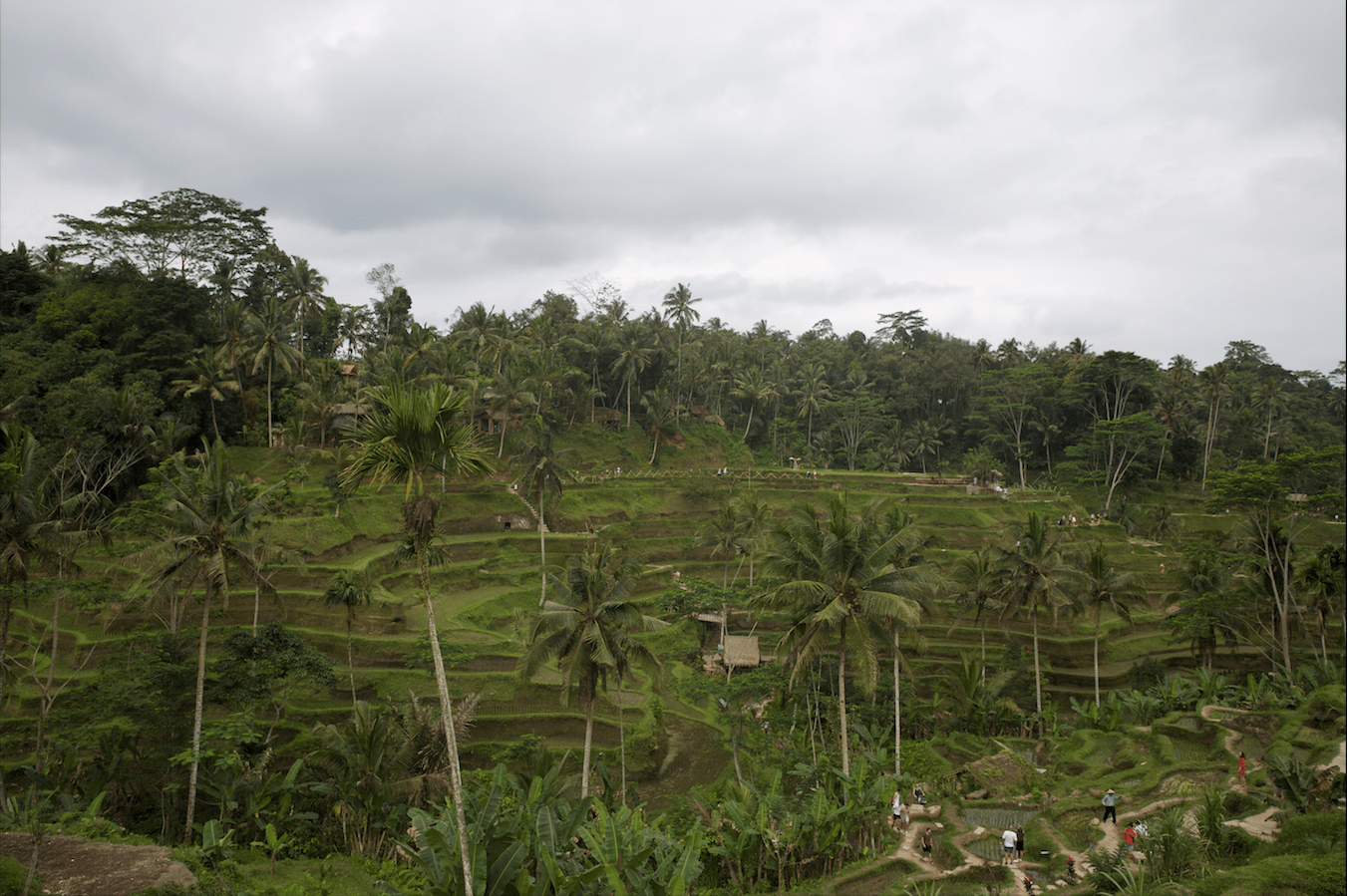
Tegallalang Rice Terraces Tegallalang rice terraces offer a perfect Bali photo opportunity with its dramatic views. The vista sprawls down and away to the rice terraces on the slopes across the valley. A local elder, a farmer who owns the land invites visitors to sample his green coconut drink, as well as to purchase woven hats that he makes from coconut leaves as well as posing with visitors for a small fee. This ancient valley has a timeless quality whether there are tourists there or not. The small village of Pakudui, a craftsman’s dominion located in Tegallalang, is a journey of witnessing the splendour of local talent at its best. Here you will find an extraordinary variety of ornamental woodwork and various carvings. The villagers here are avid Balinese craftsmen and have taken up different forms of sculptures, either handed down through generations or as a result of an ever-growing creative process using the most natural of all media – wood. But through your village tour in Pakudui you will notice the recurring presence of one particular mythical Balinese figure – the Garuda. Amongst the carved mythical lions, horses, human figures, dogs, dragons, vases, frogs, kangaroos, cats, ornate totems, panels, doors, windows, tables and the many brilliant forms of creativity – extending even to large-scale dinosaurs – the Garuda seems to be majestically ever present amongst the creations.
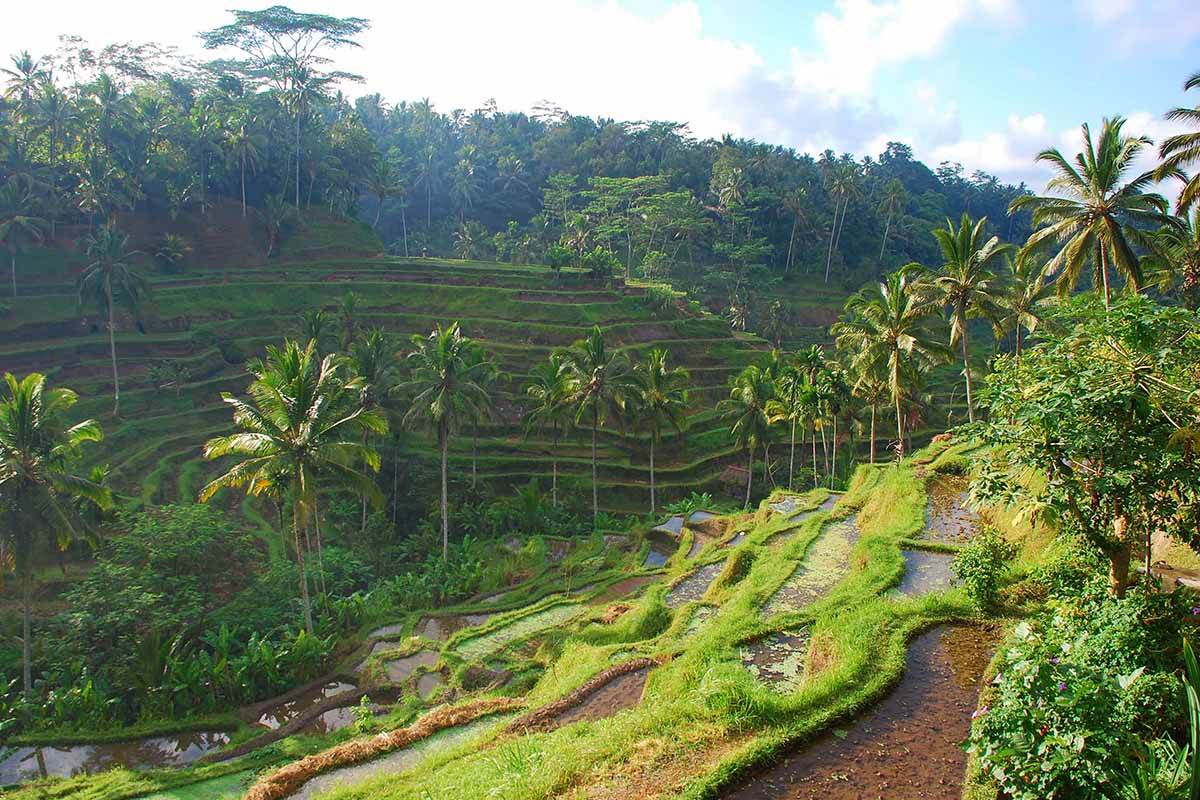
Tegallalang Rice Terraces in Ubud is famous for its beautiful scenes of rice paddies involving the subak (traditional Balinese cooperative irrigation system), which according to history, was passed down by a revered holy man named Rsi Markandeya in the eighth century. Tegallalang forms the three most splendid terraced landscapes in Ubud’s shared region, with the others being in the villages of Pejeng and Campuhan. The Tegallalang rice terraces alone offers a scenic outlook that spreads down before you and away to the rice paddies on the slopes across the valley. The high roadside location is cool and breezy and it is a well-known spot for tourists to stop and take photos. Painters and nature lovers also enjoy visiting this spot, and there are numerous art kiosks and cafes near the ledge offering their ware.
Good to Know about Tegallalang Rice Terraces
Some souvenir sellers and the old farmer will seem occasionally pushy, but there are no fixed prices, so have those bargaining skills at hand or best still, remind yourself that you are just there for the picture. A ‘modest fee’ for the posing farmer is at your own discretion. While the rice terraces serve as a highlight photo-op in the Tegallalang area, souvenir shopping options abound along the roadsides, and the trip to Pakudui village is worth its while. Pakudui is reachable after a right turn up from the famed rice paddy outlook. Find magnificent carvings and wooden art forms lined up along the small and winding village road.

Ubud Monkey Forest in Bali

What to See in Ubud Monkey Forest
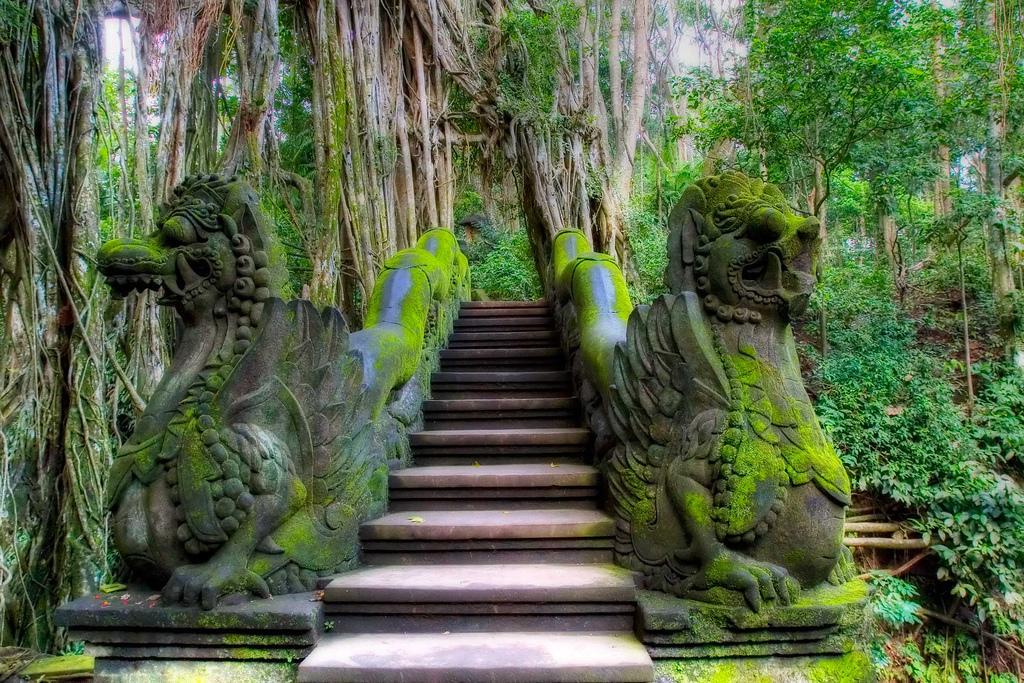
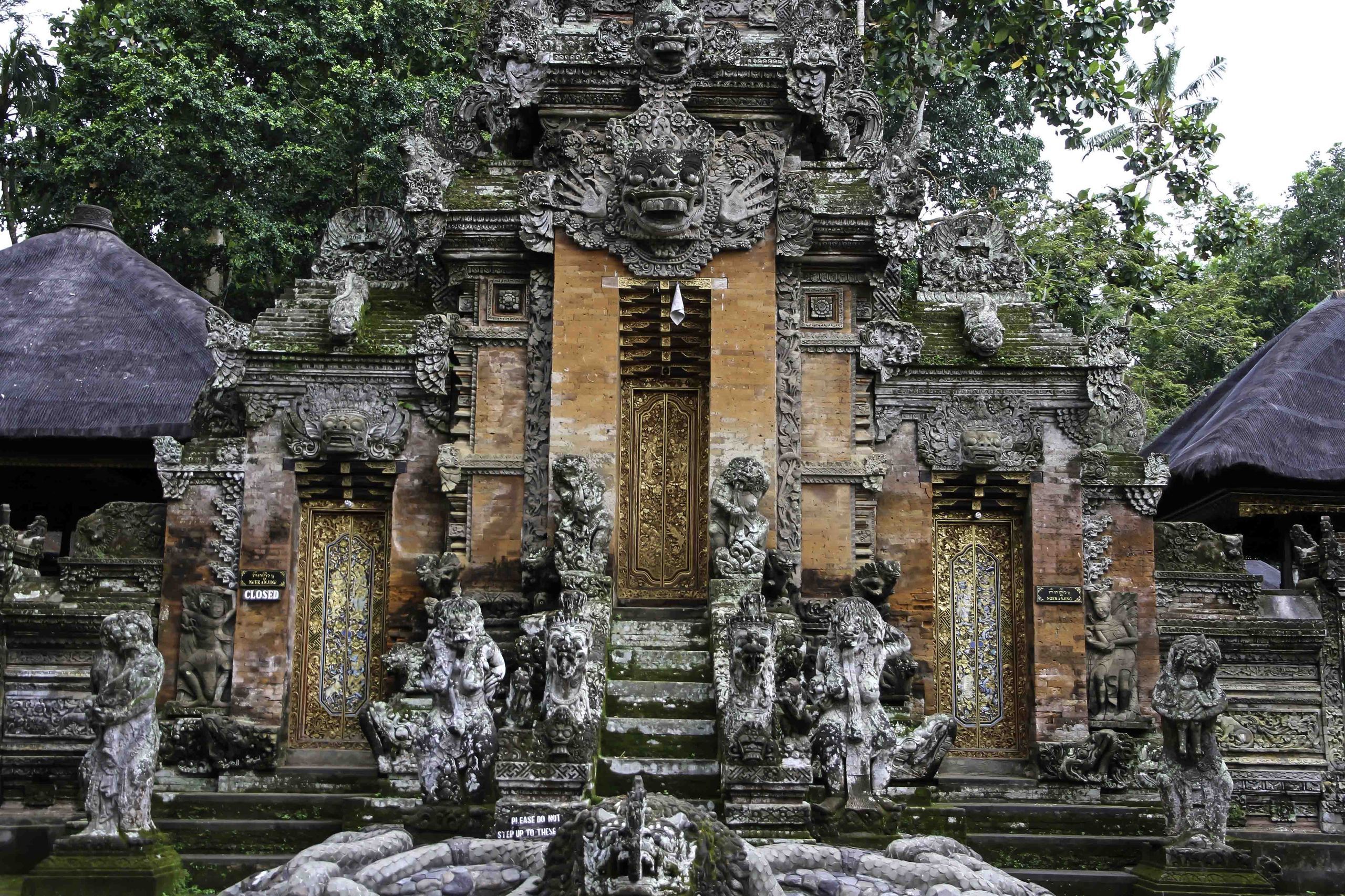
Deep inside the forest lies the 14th century Pura Dalem Agung Padangtegal. Another site of interest is the Pura Prajapati, which is dedicated to village funerals. Most mossy relics and statues are under dense foliage with little sunlight, giving these smaller sites their mysterious and ancient feel. Banyan tree roots hanging over shadowy dragon staircases offer exotic photo opportunities. You can also discover an ancient bathing temple, located northwest of the main Ubud Monkey Forest grounds, known as Pura Beji, accessible down a flight of stairs and next to a stream.
The Monkeys Being a tourism attraction, the Ubud Monkey Forest is well known for its conservation efforts. Research and studies are regularly carried out for observing the monkeys’ health, diet and breeding habits. Over a hundred macaques inhabit the forest, divided into four different known troops. While it is always tempting to touch or feed the monkeys, you are advised against it. They are wild animals. Another rule of thumb is to avoid wearing any loose jewellery or apparel – the macaques may easily snatch a necklace or bag for something interesting enough to eat.
Ubud Monkey Forest Opening Hours: Mon – Sun 08:00 – 18:00 Location: Jalan Monkey Forest, Padangtegal, Ubud Tel: +62 (0)361 971 304 Website: http://www.facebook.com/MonkeyForestUbud How to get there: Start from the Ubud main road and enter south into Jalan Hanoman, which leads you to a right turn towards the sanctuary.
Ubud Art Market in Bali


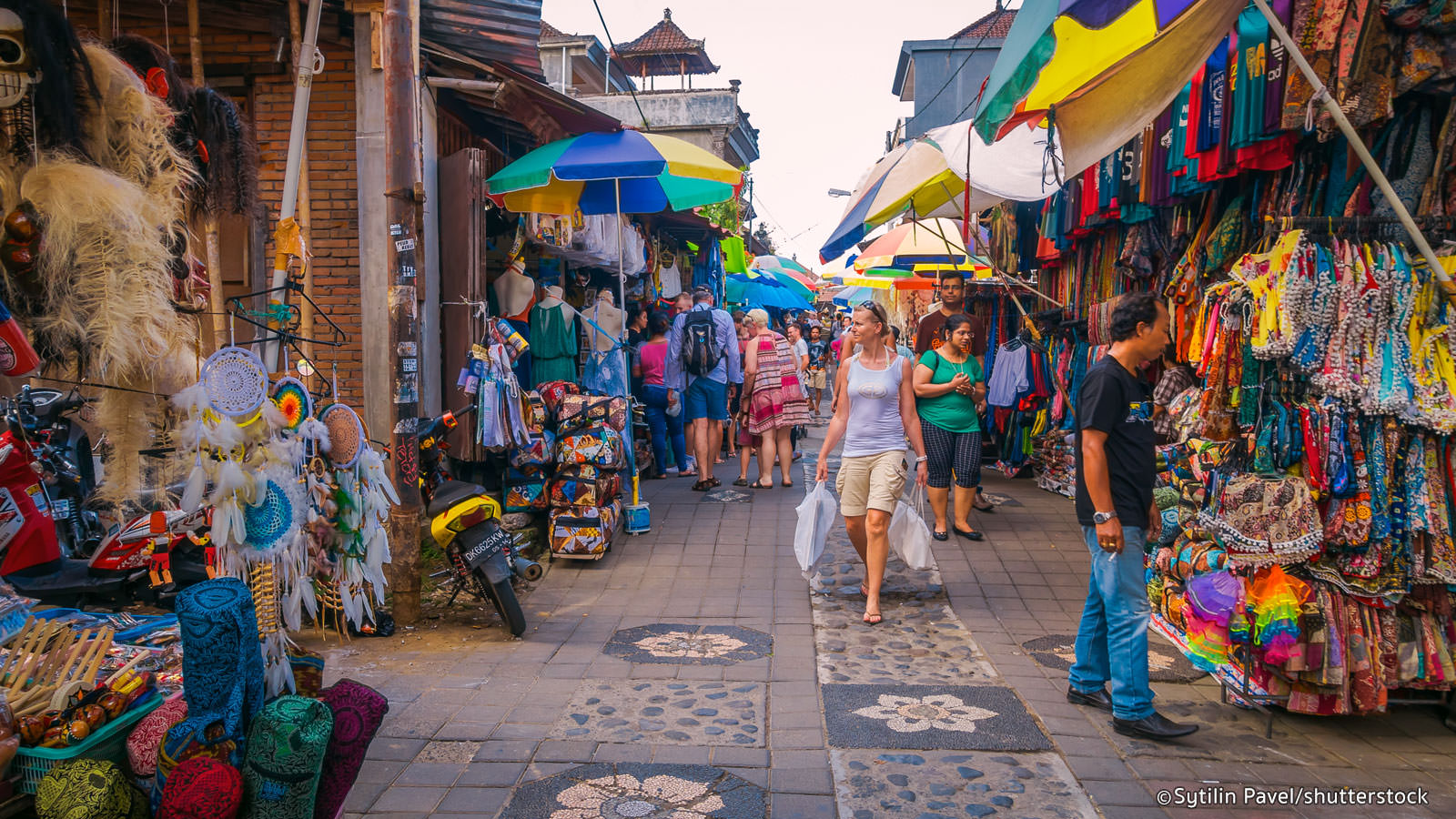
The Ubud Art Market, locally referred to as ‘Pasar Seni Ubud’ is located opposite the the Puri Saren Royal Ubud Palace and is open daily. Here you can find beautiful silk scarves, lightweight shirts, handmade woven bags, baskets or hats; statues, kites and many other hand-crafted goods. Most of the goods found at the Ubud Market are made in the neighbouring villages of Pengosekan, Tegallalang, Payangan and Peliatan. The location of the Ubud Art Market which is centred among the art producing villages, and being just opposite the royal palace which is a centre point to Ubud itself, make it a strategic shopping place for Balinese handicrafts and souvenirs. The Ubud market also serves as a setting for the Hollywood movie Eat Pray Love, which shows a scene where actress Julia Roberts opposite a male character strolling through the stalls which are frequently visited by foreign and domestic visitors in real life. Naturally, bargaining is essential.
Ubud Market Highlights
A holiday in Bali always calls for some sort of shopping for souvenirs or memorabilia of the trip, and the best place to make the search would be in the artistic central region of the island, namely Ubud and its Ubud Art Market. Bali art markets in general are always on itinerary lists especially as the various items sold are typically Balinese, unique and some unavailable elsewhere. In Ubud’s case, most visitors’ favourite leisure includes easy strolls to the heart of the town, made possible by footpaths that virtually pass every aspect of Balinese culture and life. Ubud Art Market is one among the laid-back strolls, reachable from the Wanara Wana Monkey Forest Sanctuary just down south, an approximate kilometre from the market. ‘Shopping’ here is not always about an actual purchase. Viewing the various items on display from one stall to another is a highlight on its own, showing the craftsmanship and the artistry of the Balinese. Admiring all the shops and stalls usually cannot be accomplished in one day. So if you spot an item of your interest, you might come back another day to bargain or settle the deal. Compared to art markets in Bali’s other main tourism destinations such as Kuta, the Ubud Art Market can be considered to feature higher quality items and a larger mixture. Although beach cloths and shirts printer with “Bali” on them, and ikat woven skirts, Balinese style paintings, woodcarvings and woven baskets can be found almost everywhere on the island, items ranging from quadruple-coloured bohemian skirts of satin, Moroccan-style oil lamps, quilt-stitched batik camisoles and brass Buddha statuettes, are somewhat the staple, typical Ubud Art Market curios.

Good to Know about Ubud Market
The Ubud market offers not only exemplary Balinese items, but rather a universal and international assortment, catering to visitors of all tastes. The items found here also tend to of a higher artistic value compared to other art markets such as Kuta. Prices vary, depending on your bargaining skills. Haggling is expected and indeed encouraged as part of the fun of shopping, but do so politely and with a smile. It is often helpful to decide upon the most you want to pay for an item before you start bargaining. Unlike the various shops aligning the Monkey Forest Road, most stalls at the Ubud Art Market bear no barcode or set price, so start bargaining which is a customary. Start at about half the asking price and go up till a compromise is reached. Refrain from buying anything if it is the first day of your holiday. Do a little survey while you’re enjoying your first day and get accustomed with the prices. The market is open daily from 08:00 to 18:00, and some of the stalls are even open until late at night. The market is divided into two main allotments. The western block is the main art market, and an eastern block is a traditional market serving daily groceries and necessities.

special thanks and credits to: Bali-by hotels.com


 Tulan Hayat
Leave a comment